

Kauaʻi Communities Take Disaster Planning Into Their Own Hands
Recognizing that some areas can be easily isolated during natural disasters, several towns have their own response and recovery plans.
As hurricane season gets underway and an intense wildfire season is expected to follow, Kaua‘i communities from Hā‘ena to Hanapēpē are getting plans in place for natural disasters.
Instead of a broad, one-size-fits-all approach, the plans are tailored to each community’s unique set of demographics, preparation levels and values. They’re also driven by a recognition that each area could easily be isolated during natural disasters and that it may take time for government and other aid to arrive.
“If we had trained and trusted eyes and ears in every community, it would be a lot faster than us sending responders out when all the highways are not necessarily accessible,” said Elton Ushio, administrator of the Kaua‘i Emergency Management Agency.

The efforts are being led by nonprofits and community groups. In Anahola, a nonprofit called ‘Āina Alliance, worked with the University of Hawai‘i’s Sea Grant Program to identify potential evacuation routes, firebreaks, emergency shelters and food distribution hubs. Anahola is the largest Native Hawaiian homestead on island.
“It’s hurricane season and we got a massive El Niño forming — there’s a good chance we’re going to get hit by something,” said Jeremie Makepa, president of ‘Āina Alliance and a Kaua‘i fire captain. “It’s good to be prepared.”
Envisioning Self-Sufficiency
Encompassing roughly 4 square miles on the northeastern side of Kaua‘i, Anahola faces increasing risks of wildfires, hurricanes, floods, tsunamis and sea level rise.
During three community meetings in 2024 and 2025, roughly 30 Anahola residents shared their concerns about their neighborhoods, such as vulnerable infrastructure and buildings, and considered scenarios where certain areas were isolated by damaged bridges, landslides or flooded roads. That work was part of Sea Grant and Kaua‘i County’s broader project to create a countywide pre-disaster recovery framework.
Residents also suggested where evacuation routes, resilience hubs and other community emergency infrastructure should be. Resilience hubs are regional centers that can house food and supply distributions, coordinate volunteers and disaster aid, and act as shelters during emergencies. Their model is most prominent on Hawai‘i island.
“We just looked at if we had to take care of our community by itself, what was needed?”
Jeremie Makepa, president of ‘Āina Alliance
ʻĀina Alliance tends a 400-acre parcel owned by the state Department of Hawaiian Home Lands. The land had been a dumping ground for decades, so the nonprofit began by clearing it of abandoned cars and trash and creating fuel breaks. Now it’s looking at how the land can serve as an evacuation area or accommodate emergency housing, whether that’s tents or portable buildings.

Makepa said people often depend on the government to save them, but the recent Kona low storms that damaged hundreds of homes on O‘ahu and Maui showed how government can’t be everywhere.
“We’ve just taken it a little bit further to where we build an infrastructure that can take care of our family and a lot of other people, so that’s what we’re building over here,” he said, “trying to take this area from being a dumping ground to something that is a community asset.”
The public visioning exercises resulted in a report that encourages the formation of community-led teams to coordinate disaster prevention, response and recovery. That team would also lead the implementation of longer-term resilience measures identified by the community, like retrofitting vulnerable homes, investing in aquaculture and regenerative farming, and adding a grocery store, gas station and medical facility.
“We just looked at if we had to take care of our community by itself, what was needed?” said Makepa, adding that efforts to make Anahola more self-sufficient could also benefit other communities during emergencies.
‘It’s Community Wisdom’
Anahola is not alone in wanting to get community members engaged in disaster response and recovery.
On the West Side, the Hanapēpē-‘Ele‘ele community participated in the Hawai‘i Hazards Awareness and Resilience Program — a model originally developed by the National Guard — to help the community be self-reliant during and after an emergency. Hanalei to Hā‘ena on the North Shore opted to go a different route and use a consultant to develop a plan tailored to the community’s values and unique situations.
That planning began in the mid-2000s as residents recognized that the displacement of long-time residents and a growing number of transient vacation rentals would impact the community’s ability to respond and recover from an emergency, said Maka‘ala Ka‘aumoana, executive director of the Hanalei Watershed Hui.
During Hurricane ʻIniki in 1992, the community largely took care of itself because residents had close relationships and knew what to do from past disasters.
“Fifty percent of the houses in Hanalei are vacation rental use,” she said. “What does that do to your skills? What does that do to your ability to get out, to respond, to recover? It doesn’t help you in any way.”
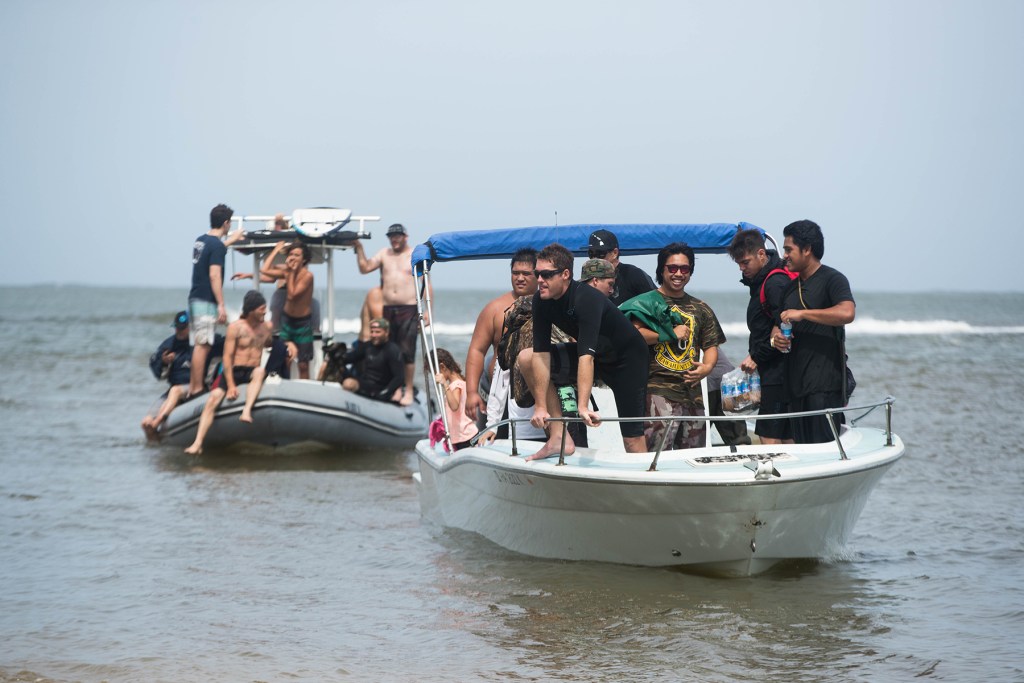
The plan resulted in the region being divided into nine zones, with each based off areas that kūpuna, or community elders, said would become isolated from flooding or landslides. Each zone has a volunteer team to oversee response efforts and communication, and they work with a broader Hanalei to Hā‘ena-wide team that communicates with the county’s Emergency Operations Center and handles public information, donations and other logistics.
Ka‘aumoana said the plan worked during the record-breaking April 2018 storm that cut off Hā‘ena and Wainiha from the rest of the island for weeks and limited public access to the westernmost part of Kūhiō Highway for over a year. Kūpuna were right about where landslides and road closures would occur, and local residents were able to get out of the area faster than government agencies could get in, she said.
“It’s community wisdom,” she said, noting how enough of the North Shore community remains that has this long-range memory.
Evacuating visitors, though, has been a challenge, both in terms of ensuring they know where to go and getting them to leave. Ka‘aumoana recalls when the military landed a helicopter at Camp Naue in Hā‘ena after the 2018 storm to take visitors out of the area. One tourist got in a verbal altercation with the pilot because the pilot wouldn’t allow him to take his golf clubs.
“You have to be prepared for that, you know, forcing someone to get out, and it’s difficult, and we also have very, very inconsistent information in the vacation rentals about what they might expect, experience, and what they should do in case,” she said.
‘Neighbors Helping Neighbors’
Some North Shore residents have gotten trained for disaster response through the Community Emergency Response Team program. The program, which was run by the Kaua‘i Fire Department and KEMA, is now offered through the nonprofit North Shore Give. It follows a national framework for training residents in search and rescue, medical triage, and other disaster response activities.
Maylette Garces, executive director of North Shore Give, said CERT is meant to supplement first responders, not replace them. “CERT really is about neighbors helping neighbors,” she said.

After the 2018 storm, about 20 to 25 CERT volunteers helped inspect damaged houses, get evacuees settled, and organized donations of food and other supplies, said Rory Enright, who co-headed CERT for 10 years.
Today, there are 86 active CERT members, more than half of whom are in Princeville, said Steve Latham, who co-chairs the North Shore Give’s North Shore Ready initiative. The rest are in Kīlauea, Anahola and Hanalei to Hā‘ena.
Resources
–County of Kaua‘i Pre-Disaster Recovery Framework
–Hanalei to Hā‘ena Community Disaster Resilience and Climate Adaptation Action Plan
–Community Emergency Response Team (CERT) Training by North Shore Give (The next training will be held Mondays and Thursdays from Sept. 14 to Oct. 1 in Hanalei. Residents do not have to live on the North Shore to participate.)
-KEMA’s Emergency Preparedness Checklists and Tips
The group hopes to get more residents trained, especially with hurricane season and a strong El Niño year underway. As with any volunteer effort, it can be challenging to keep residents engaged. Participation tends to decline when there’s long periods between disasters or as volunteers age.
“You get a leader in the community, and they really take it on and build the knowledge and put the energy into it and then their life takes a turn, and you lose that energy,” Enright said. “That’s the hardest part of getting to that critical mass.”
The North Shore CERT team is the only one on the island. KEMA’s Ushio said Kaua‘i used to have CERT teams in Kapa‘a, Hanalei, Wainiha and Princeville. The department’s budget for this year includes two $10,000 grants to help reboot CERT.
“KEMA gets praised for a lot of things, but I’m very open about saying we need to improve in certain areas, and one area is CERT,” he said.
Civil Beat’s reporting on Kauaʻi is supported in part by a grant from the G. N. Wilcox Trust.
Civil Beat’s reporting on evacuation routes is supported with funding from the Data-Driven Reporting Project. The Data-Driven Reporting Project is funded by Arnold Ventures and the Google News Initiative in partnership with Northwestern University | Medill.

