Kirstin Downey: 'The Number Of Slain Was Beyond Conception'
A British sailor became an eye witness to one of the deadliest battles for dominance of the Hawaiian Islands. His account has been languishing in a London archive.
July 3, 2026 · 7 min read

About the Author

Editor’s note: Civil Beat columnist Kirstin Downey spent several weeks earlier this year traveling in Europe and visiting institutions and places that hold items of historic significance to people in Hawaiʻi. This is another in a series of reports about what she found.
Little has been known for sure about the epic 1794 Battle of Kuki’iahu, when Kauaʻi Chief Kāʻeo clashed with Oʻahu Chief Kalanikūpule on the ‘Aiea plains, causing cataclysmic loss of life.
It was a civil war inside a family — Kāʻeo, a respected and battle-hardened warrior, was Kalanikūpule’s uncle — and when it was over, almost all the eyewitness combatants had been killed, leaving very few survivors to tell the tale.
In London I stumbled upon a signed first-person affidavit from a British participant in the massacre, providing additional details about how the tragedy occurred.
I spent six weeks working in the British archives looking for material for a biography I have been researching about King Kaumualiʻi of Kauaʻi. Kāʻeo was his father, Kalanikūpule was his cousin.

Ideas showcases stories, opinion and analysis about Hawaiʻi, from the state’s sharpest thinkers, to stretch our collective thinking about a problem or an issue. Email news@civilbeat.org to submit an idea or an essay.
Looking for a Tahitian perspective, I went to the University of London’s School of Oriental and African Studies, and there I found something surprising. Amid Tahitian documents compiled by the London Missionary Society, in a box labeled “Home, Odds,” I found a first-person account of the conflict, written in longhand by a sailor named George Lamport.
It was a signed affidavit.
Lamport was first mate on a British merchant vessel called the Jackal, which visited Hawaiʻi repeatedly between 1792 and 1794 as part of what is called the Butterworth Squadron. They were three heavily armed ships sent out to develop the fur trade between China and the Pacific Northwest.
The biggest ship, the Butterworth, had returned to England, leaving behind the Jackal, and the second ship the Prince Lee Boo, named for a popular prince from Palau who had visited England. The commander of the Jackal was Capt. William Brown, and the Prince Lee Boo was led by Capt. Robert Gordon. The two ships combined had nine cannon and also arms lockers loaded with muskets.
Both ships had been damaged by stormy weather. They arrived in Honolulu and the crew removed their rigging and gear, bringing it to shore to make repairs.
On the western end of the island, fierce fighting had erupted between Kāʻeo and Kalanikūpule, who had been named chief at his father’s death, much to his uncle’s consternation. Kāʻeo had spent weary years defending Maui against Kamehameha’s advances and was returning home to Kauaʻi.
The dispute was an on-again, off-again thing because there were also bonds of affection between the two groups, but once the battle turned deadly earnest, it was clear Kāʻeo was winning. Kāʻeo and his troops landed on western Oʻahu and swept across the island, pushing Kalanikūpule’s forces back toward their home base at Waikīkī.

Lamport wrote that Kalanikūpule came to the British ship pleading for help, and Brown provided him with arms and ammunition. Kalanikūpule then came again, and begged them to intervene, saying that he believed Kāʻeo would kill the British, too, if he won.
In Lamport’s telling, Capt. Brown put it to the crew to decide if they wanted to join the battle, and he said they unanimously agreed to do so, finding the situation “very alarming” because their “rigging and stores were on shore.”
Other accounts describe them setting off with cannon loaded on boats. Kāʻeo’s forces also likely had guns as well, but as they were traveling in traditional outrigger canoes, they were likely more reliant on traditional weapons.
Lamport described intense combat over six days, and at least one narrow escape, with one of his comrades killed. He depicts Kalanikūpule’s forces as unimpressive, or perhaps undecided, and that ultimately, “owing to the cowardice or treachery of our supposed friends,” the British were forced to do “the best we were able by ourselves.”
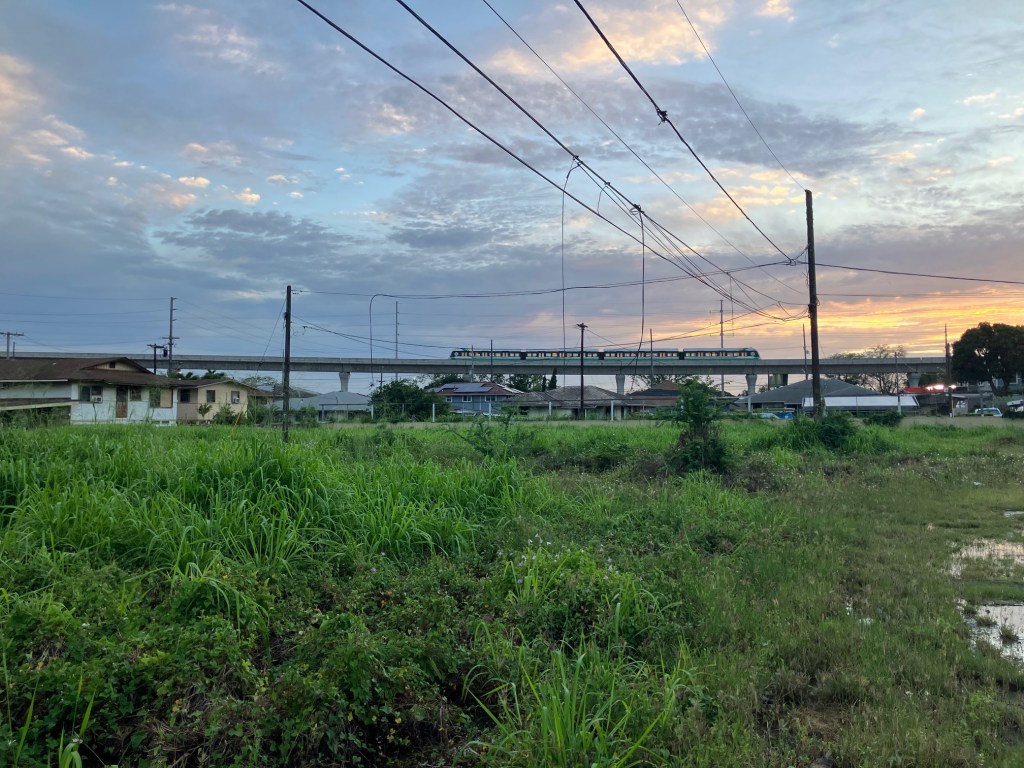
On Dec. 12, 1794 near what is now Pearl Harbor, Kalanikūpule and his British allies secured a complete victory. Kāʻeo and his army were slaughtered.
“The number of the slain was beyond conception,” Lamport said.
That’s consistent with Hawaiian accounts, which recall heaps of bodies strewn across the landscape.
But two weeks later, Kalanikūpule turned on the British, Lamport wrote. He said that while most of the crew was engaged in killing and salting pork for their voyage, they were overwhelmed by Oʻahu warriors, badly beaten, stripped and imprisoned. Capts. Brown and Gorden were killed on their ships. Lamport saw Brown’s naked body suspended on a pole, dangling by his hands and feet, carried by two Hawaiians.
The British were terrified but it emerged that Kalanikūpule had decided to seize the two armed ships and use them to attack Kamehameha. Kalanikūpule asked the British if they would help him in this new cause, and, seeing little alternative, they agreed, making the ships ready to sail under the watchful eyes of gloating warriors. The man who told them he had killed Brown oversaw their work.
On Kalanikūpule’s orders, they loaded the carriage guns and ammunition onto the Jackal and headed out to sea. But the British, fearing for their lives, had privately decided they would attack Kalanikūpule and his top advisors on board the two ships on the first night out. In a coordinated, armed surprise attack, they overwhelmed the Oʻahu warriors, shooting some and battering the others with the butt ends of their muskets.
To their “great satisfaction, (they) cleared the decks,” Lamport reported.
The British placed Kalanikūpule, his wife and a few of their attendants in a small boat and sent back them to shore. They kept three women on board. They sailed to Hawaiʻi island, where they landed and dropped off the women. They told their story to John Young, a British sailor who had arrived in Hawaiʻi aboard the ship Eleanora and who had decided to stay. They restocked with supplies for the long voyage to Macau and then to England.
As they passed Kauaʻi, they learned that civil war had broken out there as well, and that the two Englishmen living on that island had been killed.
Back in England in 1795, Lamport met with some clergymen from the London Missionary Society who were deliberating over whether to send missionaries to Tahiti or Hawaiʻi. When they asked if he thought it would be safe for them to go to Hawaiʻi, he recommended they go to Tahiti instead.
The missionaries decided to avoid Hawaiʻi for the foreseeable future. “It appears in fact the people of Owhyhee and Oahoo are far more ferocious than any other people of the South Seas,” the clergymen wrote in a report, also housed in the same archive. They noted also the malign influence of European and American weaponry on the Hawaiian Islands.
Moreover, they said, they expected more warfare on the horizon.
A few months after Kalanikūpule’s ignoble dispatch into a rowboat, Kamehameha invaded and conquered Oʻahu, which had been stripped of its armaments during the fracas with the Butterworth Squadron. In the end, Oʻahu’s strongest surviving defender was Kaʻiana, Kamehameha’s former ally, who had switched sides, famously dying on the approach to the Pali Lookout.
 Sign up for our FREE morning newsletter and face each day more informed.
Read this next:
Local reporting when you need it most
Support timely, accurate, independent journalism.
Honolulu Civil Beat is a nonprofit organization, and your donation helps us produce local reporting that serves all of Hawaii.
ContributeAbout the Author