Kirstin Downey: Warfare Came Quickly To The Hawaiian Islands
The writings of a Scottish botanist document the battlefield tactics in use by Kamehameha and others after the arrival of Capt. Cook.
July 1, 2026 · 8 min read

About the Author

Editor’s note: Civil Beat columnist Kirstin Downey spent several weeks earlier this year traveling in Europe and visiting institutions and places that hold items of historic significance to people in Hawaiʻi. This is another in a series of reports about what she found.
Buried within government and university archives in the United Kingdom, I recently found several manuscripts that add fresh perspective on Hawaiian history.
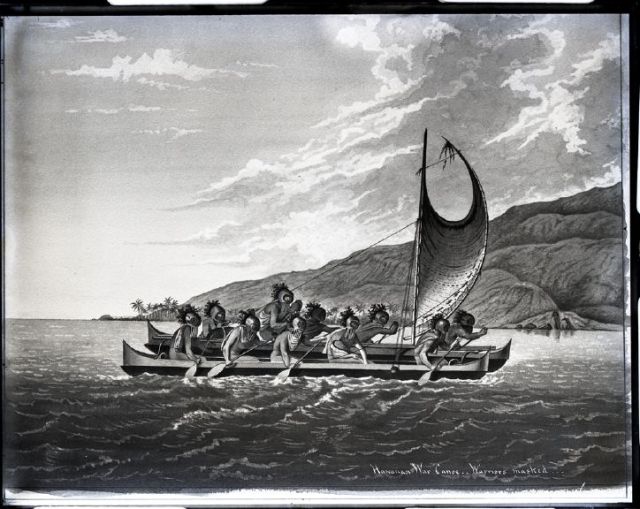
Together they add new insights into how quickly and thoroughly modern weaponry and tactics of warfare spread through the islands within a decade of the arrival of Capt. James Cook in 1778.
A manuscript by Scottish botanist Archibald Menzies, housed at the University of Edinburgh archives, contains an early report of trench warfare on the Big Island in the 1780s, when Kamehameha was consolidating his power base there.
I spent six weeks working in the British archives looking for material for a biography of High Chief Kaumualiʻi of Kauaʻi. Born in 1780, about two years after Cook and his crew first arrived in Hawai‘i, he confronted epic challenges as leader of his people.

Ideas showcases stories, opinion and analysis about Hawaiʻi, from the state’s sharpest thinkers, to stretch our collective thinking about a problem or an issue. Email news@civilbeat.org to submit an idea or an essay.
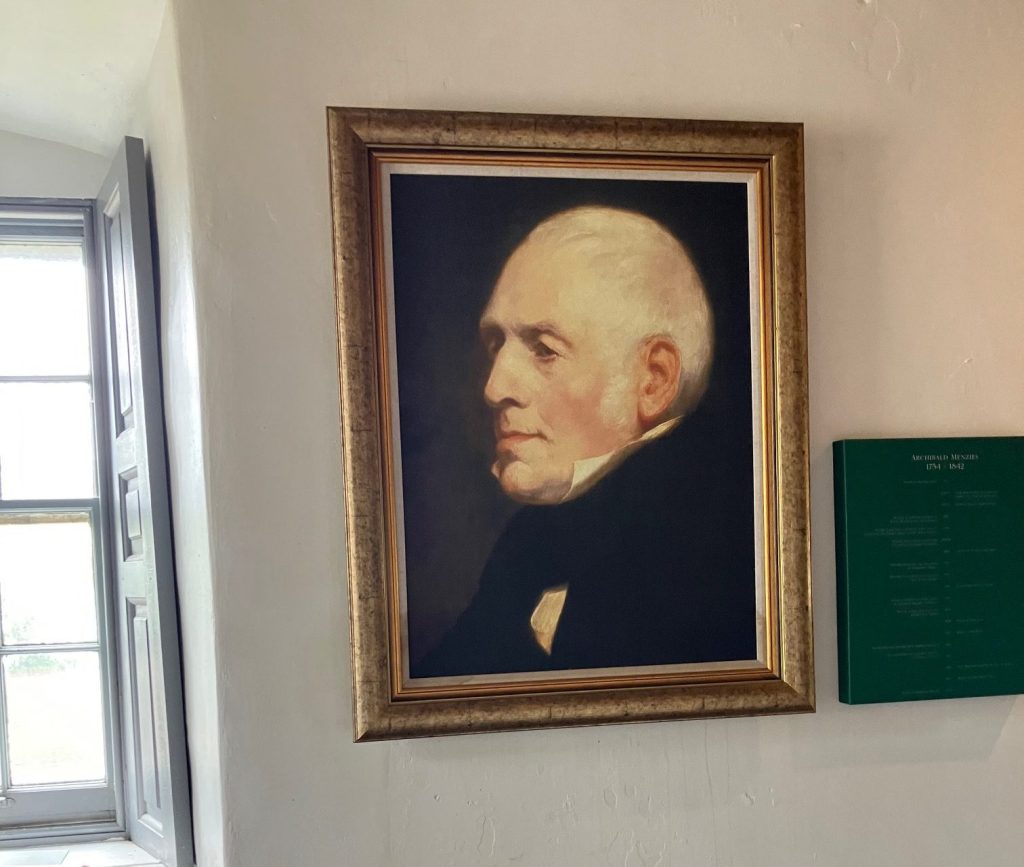
Menzies, a scientist and physician, traveled to Hawai‘i for five lengthy visits between 1786 and 1794. Humane and thoughtful, he had a gift for languages, possibly also because of a gift for romance that meant he spent more time at night on shore than his fellow voyagers. He learned a lot more about what was happening in the islands than his colleagues.
He was a friend and admirer of Kaua‘i Chief Kāʻeo and also of Kāʻeo’s young son Kaumualiʻi, which has made me particularly interested in what he had to say.
To learn more about him, I went to the archives in Edinburgh and also to the Menzies’ ancestral hometown in the lush Scottish highlands.
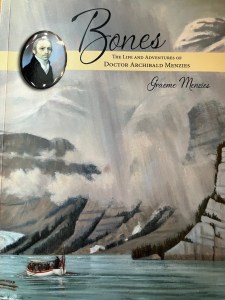
He was part of a scattered Scottish clan named Menzies, associated with a castle near Aberfeldy in Perthshire, according to a new book called “Bones: The Life and Adventures of Doctor Archibald Menzies,” published in 2024.
Menzies Castle, a defensive pile built of gray stone, is famous for having housed Bonnie Prince Charlie, who entered Scotland in 1745 at the head of an army hoping to recover his throne. Many members of the Menzies family fought at the prince’s side and were killed in a crushing defeat at the hands of the English. After the battle, the Duke of Cumberland, now known as the Butcher of Culloden, briefly took up residence in Menzies Castle.
He was the uncle of King George III, the monarch in Menzies’ time.
It’s not surprising that Menzies was sensitive to the subject of political conflict that ends in violence.
Menzies had been expected to publish a book about his travels but never did, unlike many other voyagers of the day, including Capts. Cook, John Mears and George Vancouver. These adventure books were popular and Menzies could well have penned a lucrative bestseller.
But he never sought a publisher, and his three surviving manuscripts, all pieces of a single connecting narrative, got dispersed around the world. Two sections are housed in archives in England and Australia, including one I wrote about recently, and this third section, which just turned up last month in Edinburgh.
In the three surviving manuscript journals, describing events from 1792 to 1795, Menzies wrote daily accounts of what he saw and experienced in Hawai‘i, including many friendly interactions with people on Kauaʻi, Oʻahu and the Big Island. On these visits, he was traveling aboard the Discovery with Capt. Vancouver, who was mapping the Pacific.
Menzies viewed Vancouver, who was brutal to his crew, with growing distaste.
Menzies is believed to have written a similar journal for his visits to Hawai‘i in 1787 and 1788 on the ship Prince of Wales but it has never been found. In the 1792-1794 journals, Menzies makes frequent references to his earlier visits.

He used the spelling and vocabulary styles of the day when English-speaking people were trying to spell Hawaiian words phonetically, such as employing T for K. Diacriticals had not yet been invented.
In his accounts, Menzies described the progression of arms into Hawai‘i, with scattered chiefs first gaining a gun or two through one-on-one trade, up until a deluge of weapons of war entering into the islands, mostly obtained from British trading expeditions.
Menzies repeatedly encountered Kaʻiana, the warrior who had traveled with the British naval Capt. Mears to China in 1787. Kaʻiana had returned to the islands laden with armaments, and had done much to help Kamehameha climb to power, prevailing against other powerful chiefs of the island of Hawai‘i.
“It was in these wars that Kaʻiana, by the great knowledge he acquired of fire arms in Captain Mears’ voyage, gained so much ascendancy and became so powerful a chief on this Island,” Menzies wrote.
“Chief of War,” the popular Apple TV series starring Jason Mamoa, was based on Kaʻiana, who was world-famous during his lifetime thanks to the popularity of Mears’ book.
In the Edinburgh manuscript, Menzies described a life-threatening trek up Mauna Loa when he was visiting with the Vancouver expedition. On his way to the mountain, and some miles into the countryside, Menzies passed through an area he was told had been the site of a fierce battle in the late 1780s, still visibly pitted with foxholes.
“Kamehameha’s warriors were then headed by Kaʻiana, who by that time, had made use of firearms, which obliged the warriors of Keōua to intrench themselves by digging small holes into the ground into which they squatted down at the flash of their opponents’ muskets,” he wrote. “Many of these little entrenchments were still conspicuous, and the Natives showed them, with seeming exultation as it was to them a new mode of eluding the destructive powers of our fire arms on plain ground.”
Menzies was saddened to see this development.
“Here then we behold the dawnings of fortifications amongst these people, which they probably never thought of, till these fire arms were introduced amongst them; and we also see how naturally this new mode of fighting begat the same mode of defense, here as amongst most refined warriors.”
A partial manuscript written by Menzies was eventually published in Hawai‘i in 1920 as a book called “Hawaii Nei, 128 Years Ago,” and ends in 1794. The author appended material from a literary magazine that described Menzies’s harrowing ascent of Mauna Loa early that year. The manuscript at Edinburgh is the textual account on which that magazine article was based.
The Australia manuscript takes the account up to 1795 but was unknown to the author of the 1920 book.
In other words, Menzies once had a complete manuscript, ready for publishing.
The big question is why he never published it.
It is possible that its content would have been controversial in England because it shows the British actively supporting an arms race they said publicly they had tried to stop. In his own published book, Vancouver presents himself as a peacemaker who tried to discourage warfare, but in fact in 1794 he ordered his carpenters to build a ship for Kamehameha, which allowed the Hawai‘i island chief to transport heavy artillery to other islands.
Kamehameha had by this time amassed a considerable arsenal. According to documents at the University of London, Kamehameha had 13 carriage guns, 33 swivel guns and 400 muskets by 1794.
Vancouver was eager to prevent Menzies from publishing his own account of the voyage. He put Menzies in chains on the last leg of the trip because he would not give Vancouver his manuscript.
Menzies was eventually released but he had gotten the point.
Vancouver published his own, multi-volume account of the voyage, with financial backing from the British admiralty.
Menzies went on to have a long and successful career in the Royal Navy as a surgeon and later as a physician in private practice in London but his manuscripts were left stored away all these years, waiting for historians to find them and reassemble the pieces.
It probably worked out better for Menzies that way.
 Sign up for our FREE morning newsletter and face each day more informed.
Local reporting when you need it most
Support timely, accurate, independent journalism.
Honolulu Civil Beat is a nonprofit organization, and your donation helps us produce local reporting that serves all of Hawaii.
ContributeAbout the Author