Makana Eyre: Returning Indigenous Remains A Top Priority For Schatz
Hawaiʻi U.S. Sen. Brian Schatz is pressing academic institutions to follow federal law regarding remains and cultural objects.
July 2, 2026 · 5 min read


About the Author

Over the last decade, museums and universities have gotten good at speaking fluently about Indigenous respect.
One way they do it is the land acknowledgement. University of California, Berkeley notes, for instance, that its campus sits on “ancestral and unceded land of the Chochenyo Ohlone” while Harvard’s Chan School of Public Health mentions that it occupies the land of the Massachusett Tribe.
Supposedly, these statements are meant to recognize historic wrongs. Yet even to bright-eyed progressives, they have begun to feel a bit hollow — symbolic allegiance without action, even sham performance.
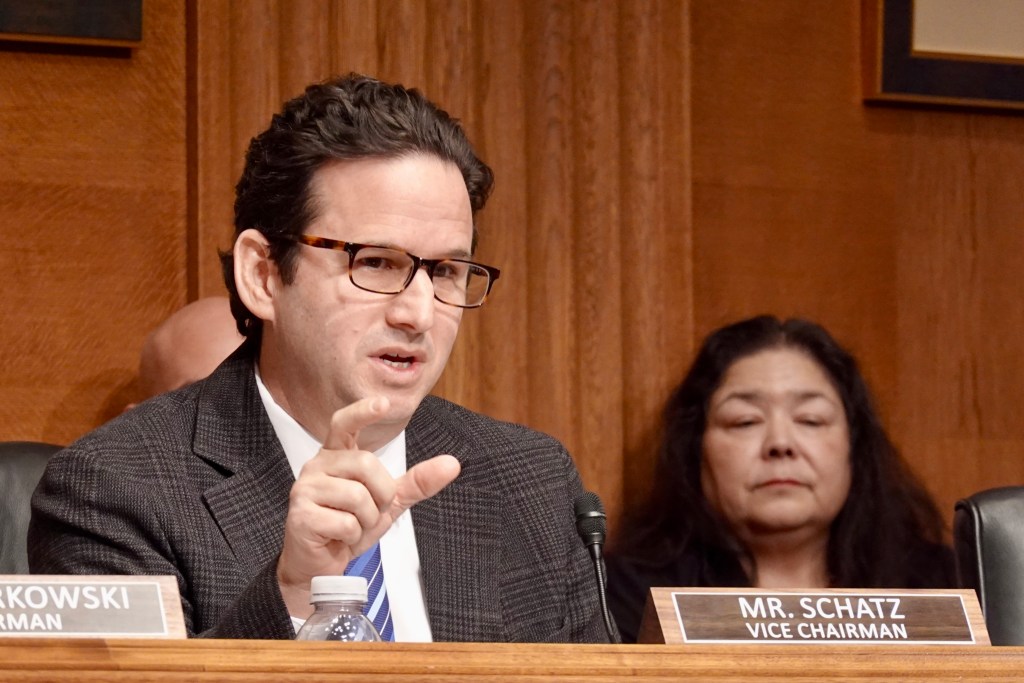
These empty words have clearly gotten under the skin of our senior U.S. Sen. Brian Schatz.

Ideas showcases stories, opinion and analysis about Hawaiʻi, from the state’s sharpest thinkers, to stretch our collective thinking about a problem or an issue. Email news@civilbeat.org to submit an idea or an essay.
During a Senate floor session in 2024, when he was the chair of the Indian Affairs Committee, Schatz lambasted universities for virtue signaling.
“It smells of the worst kind of colonialism with a thin veneer of progressive verbiage,” he said.
To his credit, Schatz is pressing for action.
Since at least 2022, he’s been using the stature of his office to pressure institutions into something concrete, namely compliance with the Native American Graves Protection and Repatriation Act.
Passed in 1990, NAGPRA requires museums and governmental agencies to identify and return Indigenous remains and certain cultural items to their communities.
Even though NAGPRA has been on the books for many years, Schatz rightly reminds us that tens of thousands of remains and sacred objects are still squirreled away in the vaults of some of our nation’s most vaunted institutions.
Schatz’s most recent effort in his pressure campaign came last month when he sent a batch of oversight letters to 15 museums and universities — Harvard and UC Berkeley included — urging them to comply with the law.
These two universities are a good example of Schatz’s outrage. In 2023, the nonprofit newsroom ProPublica published a landmark investigation about roughly 600 federally funded institutions across the country still holding ancestral remains and sacred items.
Using NAGPRA data from the National Parks Service (updated in January 2025), the investigation found that Harvard and UC Berkeley each possess around 5,000 sets of remains that have not been made available for return.
Schatz’s pressure campaign has implications for Hawaiʻi, and not just because he is one of our senators.
Iwi kūpuna represent one of the most delicate questions in the state. In Hawaiian culture, iwi are more than just remains. They are bound up in mana and sacred links between the deceased and the living.
According to NAGPRA data gathered and presented by ProPublica, the Bishop Museum, the U.S. Department of Defense and the Department of the Interior, among others, all possess ancestral remains in Hawaiʻi, though as of the most recent data, they’ve made all of them available for return.
According to ProPublica’s investigation, the only local agency that hasn’t made some remains available for reburial is the Department of Land and Natural Resources, a key state department involved in preserving, protecting and returning iwi.
DLNR declined to make a burial expert available for an interview but an agency spokesman convincingly disputed disputed ProPublica’s framing of the data. In a statement, DLNR said that it does not permanently hold iwi as a museum or university might do. It takes temporary custody while arranging for return under state law. Delays do sometimes occur, though mostly due to finding an approved burial site, permissions or reaching consensus among descendants.
Today, NAGPRA is more than 35 years old. For years, museums and agencies responded to its requirements with stony silence and little action.
Things might finally be changing.
Schatz told me that an earlier wave of letters in 2024 prompted good participation and surprisingly little resistance.
“I did not expect this level of compliance,” he said in an interview. “I was expecting a ton more resistance than we got.”
By and large, Schatz seems optimistic. “A lot of these institutions are making a sincere effort at coming into compliance,” he said.
And for those who don’t, Schatz is willing to increase the pressure. “We’re certainly willing to use the subpoena power of the committee if necessary,” he said.
Since there are no criminal penalties for non-compliance with NAGPRA, Schatz is limited in what he can do. Yet in the era where the court of online opinion can swell or sink a reputation, shame and embarrassment are potent.
Schatz is keenly aware of this. With Trump and his band of marauders hollowing out programs that do try to bring more equity to our nation, it’s nice to see our own senator make such a forceful, passionate case on a topic that matters to a lot of people in Hawaiʻi.
 Sign up for our FREE morning newsletter and face each day more informed.
Read this next:

Local reporting when you need it most
Support timely, accurate, independent journalism.
Honolulu Civil Beat is a nonprofit organization, and your donation helps us produce local reporting that serves all of Hawaii.
ContributeAbout the Author