Makana Eyre: Who Regulates Bounty Hunters In Hawaiʻi? No One
Meanwhile, other states have imposed strict rules for bail enforcement agents.
July 8, 2026 · 6 min read

About the Author

If you’re lucky, you’ll never have to experience commercial bail bonds firsthand.
Getting up close to this system, found basically nowhere in the world outside the United States and the Philippines, usually means something has gone terribly wrong for you or someone you love: an arrest and a criminal charge.
Cash bail is notorious for being convoluted, expensive and seedy.
In 2022, the U.S. Commission on Civil Rights found that it causes significant racial and gender disparities and leads to many people wasting away in jail because they can’t pay. It also found that bail destabilizes lives: people lose jobs and housing and often spiral from there.
Wookie Kim, legal director at the ACLU of Hawaiʻi put it to me starkly, “It creates a two-tiered system of justice.”

Ideas showcases stories, opinion and analysis about Hawaiʻi, from the state’s sharpest thinkers, to stretch our collective thinking about a problem or an issue. Email news@civilbeat.org to submit an idea or an essay.
People who don’t have means, he explained, are stuck behind bars, not because they are a danger to the public, but because they don’t have money.
Hawaiʻi regulates bail and bail agents, at least to some degree. There are limits on excessive bail, and bondsmen must be licensed through the Hawaiʻi Department of Commerce and Consumer Affairs’ Insurance Division, which imposes rules and regulations.
Still, one part of the industry is almost always overlooked. In the shadows of cash bail is something far murkier and less understood: bounty hunting or, in the technical parlance, bail enforcement.
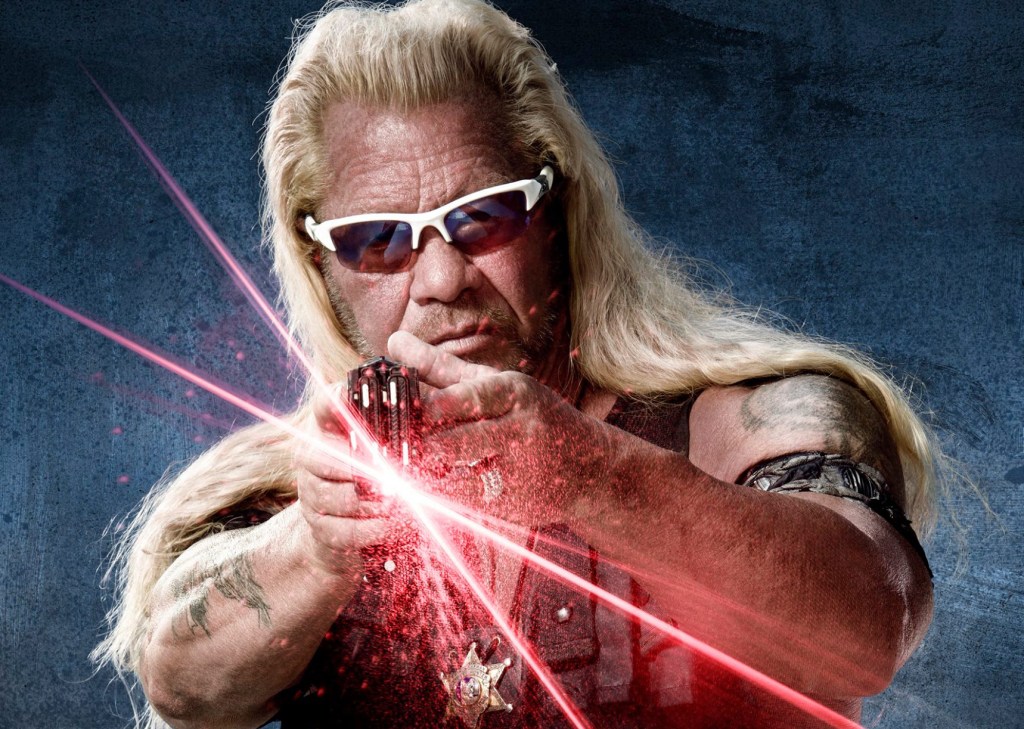
Many Hawaiʻi residents are already familiar with this business. Our state was long the home of America’s most famous bail enforcement agent: Dog the Bounty Hunter.
If you had a TV in the mid-2000s, you probably saw him swaggering around Oʻahu in his tight black pants and sleeveless v-neck vests.
His show was TV gold, a mix of rah rah machismo and Dog’s famous moral lectures delivered glibly once his fugitive was in cuffs. (Could there be a more perfect example of a captive audience?)
While Dog the Bounty Hunter was a reality show, the business Dog worked in is very real.
Like Dog, whose real name is Duane Chapman, bounty hunters are sent out to rearrest a person who violated the terms of their bail.
Over the years, they’ve earned a sordid reputation, with cases involving impersonation of law enforcement and the use of violent, even deadly force.
Curious to know how the state of Hawaiʻi regulates bail enforcement agents, I went looking for answers.
Over the course of a week, I spoke to officials at the Hawaiʻi Insurance Division (which regulates bail bondsmen), the Department of Commerce and Consumer Affairs and the Judiciary. I also interviewed senior members of the Legislature, bail bondsmen and bounty hunters.
No one could tell me who regulates bail enforcement agents.
The reason is that Hawaiʻi, it turns out, essentially doesn’t regulate this part of the business. While some bounty hunters have private investigator licenses, there appears to be no specific watchdog to police the way they do their job.
This strikes me as a perplexing lapse of oversight, especially when you zoom in on the tactics of many bounty hunters.
Above all, they tend to exploit the way people perceive them. They wear badges and tactical gear and have been accused of blurring who they are or suggesting they are law enforcement, even though they are private actors.
Perhaps riskiest of all, some of the people they’re sent to rearrest are struggling with substance use or mental health challenges, sometimes both.
In essence, the state of Hawaiʻi allows people to perform what is effectively police work without licensing, training and meaningful supervision. It’s not hard to imagine how things could go badly.
Across the country, bounty hunters have been involved in scandal after scandal. In Texas, a crew of them allegedly entered a man’s home illegally and promptly started a shootout. In New York, a team raided a house with guns raised. It turned out they had the wrong home.
In Ohio in 2019, a bounty hunter was convicted and jailed for impersonating a federal agent, kidnapping and wire fraud, while another, in Colorado, was convicted of fraudulently obtaining confidential phone records.
Several states such as New Jersey and New York have abolished or limited cash bail, cutting off to some extent the business that necessitates bounty hunting.
Other states have imposed strict rules for bounty hunters, like California, which requires them to complete a 40-hour power of arrest course and 20 hours of approved pre-licensing classroom study, among other requirements.
At one point, Hawaiʻi tried to do something similar. In 2006, the Legislature introduced a bill that would create rules for fugitive recovery. Blake Oshiro, then a member of the state House of Representatives, proposed the legislation after a constituent brought the issue to his attention.
“If we are going to have people exercising law enforcement-like duties,” Oshiro told me, “then we need to know who these people are and make sure that they’re doing it right.”
House Bill 3014, the bill Oshiro drafted, made it out of the House Judiciary Committee. But it faltered in the Senate and never reached a floor vote.
Oshiro tried again in subsequent sessions, but the issue got mired in sunrise review, the process where the state auditor evaluates whether an unregulated occupation needs regulation. Ultimately, it seems that the auditor never conducted the analysis.
Since Oshiro’s effort, no state legislator has meaningfully tried to regulate the industry.
Hawaiʻi, so goes the story, is one of the most progressive states in the union. Why, then, do we allow bounty hunters to roam around unchecked?
The lack of regulation feels like a failure of oversight, the sort blind spot where bad things tend to happen before anyone notices.
 Sign up for our FREE morning newsletter and face each day more informed.

Local reporting when you need it most
Support timely, accurate, independent journalism.
Honolulu Civil Beat is a nonprofit organization, and your donation helps us produce local reporting that serves all of Hawaii.
ContributeAbout the Author