Transportation Barriers Block The Route To Opportunities For Many On Oʻahu, Study Finds
On the same day a study was released calling for more accessible public transportation, fares for TheBus were hiked.
Kealohilani Hokoana starts planning her day around a car she does not have.
Five days a week, her children’s father – they share a car even though they do not live together – leaves for his job at the airport before 4 a.m., early enough to beat traffic from Waipahu and secure a parking spot. That means the family car is gone until he returns from work sometime after 3 p.m.
Hokoana, 35, a single mother of two, builds her life around that schedule.
Doctor’s appointments, dentist visits and grocery runs all get pushed to late afternoons or weekends.
She took a job as a supervisor at her daughter’s elementary school, a 10-minute walk from home, because it was the only job she could find that did not require a car or a bus, and ended at the close of the school day.
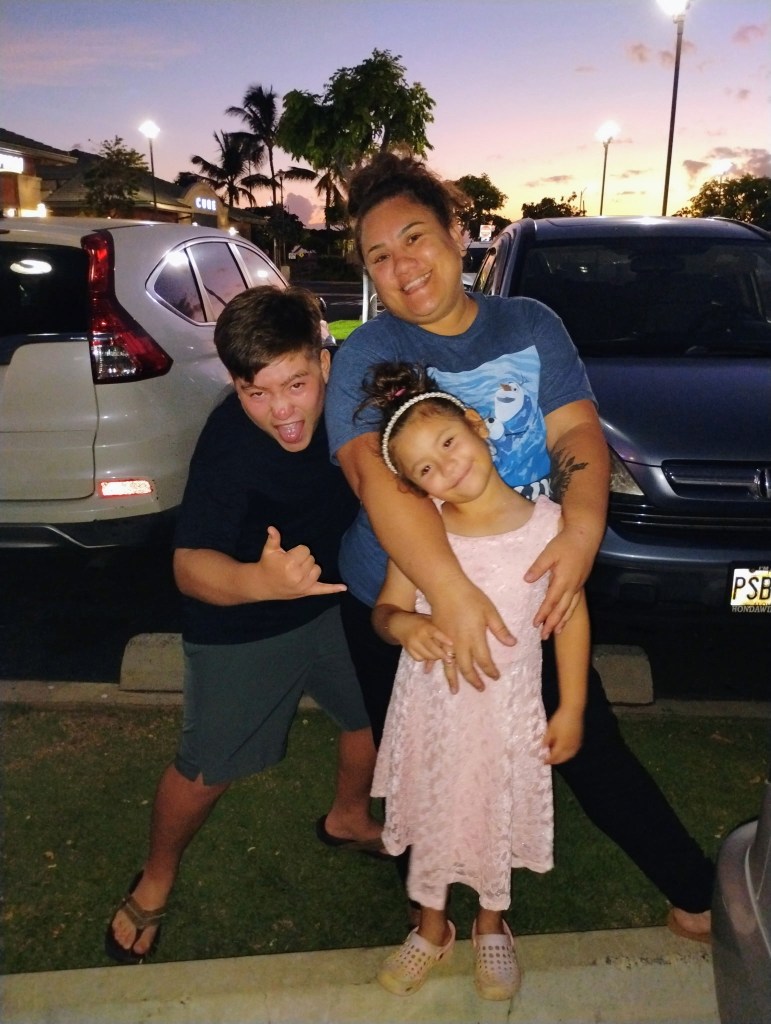
When the Don Quijote within walking distance of her apartment closed, she started trekking 30 minutes to the nearest grocery store. She could take TheBus but, for a single trip with her children to one destination and back, it is too expensive on her $600-a-month income.
The challenges Hokoana faces without a car echo those outlined in a new report about transportation insecurity on Oʻahu — which it defines as when people can’t leave home when they need or want to because of transportation barriers.
The report by Hawai’i Appleseed Center for Law and Economic Justice found that was the fate faced by nearly 1 in 4 Oʻahu residents in the previous month.
The survey of 666 O’ahu residents between September and October 2025, found that the burden falls hardest on specific groups, namely households earning under $75,000 annually, half of which reported that transportation costs regularly prevented them from reaching essential destinations.
“It’s because of money, right?” said Genie Naone of Kapolei, who recalled the challenges described in the Appleseed report. She used to struggle to get to work on time because of bus delays, her car breaking down, or parking being too expensive.
“I got reprimanded at work because of transportation issues,” she said.
Now that her professional and personal circumstances have changed, she feels “super, super blessed,” Naone, 55, said. “If everybody had a good cost-of-living paycheck, then I think we all would be okay with transportation.”
Naone’s past — and Hokoana’s present — make clear that transportation is how people access opportunity, said Malia Boksanski, transportation policy equity analyst at Appleseed, co-author of the report.
“If you don’t have reliable transportation, that’s a big barrier to all of these other important resources in your life.”
Malia Boksanski, Appleseed Center for Law and Economic Justice
“It connects you to your job and to your school and to the grocery store to get food,” Boksanski said. “If you don’t have reliable transportation, that’s a big barrier to all of these other important resources in your life.”
She said the findings indicate that people can be transportation insecure even if they own a vehicle, as was the case for 85% of those who responded to the survey. The costs of vehicle ownership add up — gas, insurance, registration — and traffic congestion and long drive times can be hurdles, too.
“No matter how people choose to get around,” Boksanski said, “it’s kind of a universal challenge, transportation.”
Fares Going Up
The Appleseed report calls for improvements such as more accessible bicycle lanes and safer sidewalks and intersections for pedestrians.
And it highlights the need for public transit to be more reliable and frequent.
“We want to make sure that all modes of transportation people have easy access,” Boksanski said, “but the end goal is, we want to encourage public transportation and active transportation: being able to walk and bike in your communities, being able to take the bus and get where you need.”
However, on the same mid-June day of the report’s release, the Honolulu Department of Transportation announced that fares for public transportation would rise for the first time since 2022.
The single cash fare for a ride on TheBus, increased Wednesday from $3 to $3.25, adult monthly passes jumped from $80 to $90, and the seven-day pass went from $35 to $45, among other price hikes.

Roger Morton, the department’s director, said in a statement that the changes will fund ongoing maintenance and service improvements. But Honolulu Councilmember Tyler Dos Santos-Tam, who voted against the increase, called it a step in the wrong direction.
“If we said the bus would be $2 instead of $3.25 to ride, would that increase ridership? Yes. And in the big scheme of things, that difference to the city budget is actually not very much,” Dos Santos-Tam said.
Making buses affordable is “the easiest way that we can close the transportation equity gaps,” he added.
The first term councilmember, who is now running for reelection, represents District 6, including Chinatown, Kalihi and Downtown Honolulu – what he calls “historically transit-dependent communities.” His constituents, he said, “are workers who are underpinning our economy, and they need to get around.”
In previous budget cycles, Dos Santos-Tam has advocated for strengthening the city’s reduced-fare program for low-income riders, adding that program remains deeply underutilized.
Youth On Board
By contrast, Maui is making changes to its bus system that include offering free fares to students and county employees starting July 1 — the same day the O’ahu price increase will take effect.
That’s the kind of policy Boksanski said is needed most: for Honolulu to invest in expanding keiki transportation options, including school bus services, discounted or free passes for TheBus, and ride-sharing programs. Instead, a statewide free transit bill for keiki was killed by the Legislature earlier this year.
According to the survey, those from larger households with children were much more likely to not be able to leave their homes due to transportation issues. It also found that half of the students surveyed would use public transportation more frequently if free or discounted fares were available.
Building a young ridership, Boksanski said, could prompt future investment in infrastructure that would build up public transit services for riders of all ages and demographics, and from all areas of the island.
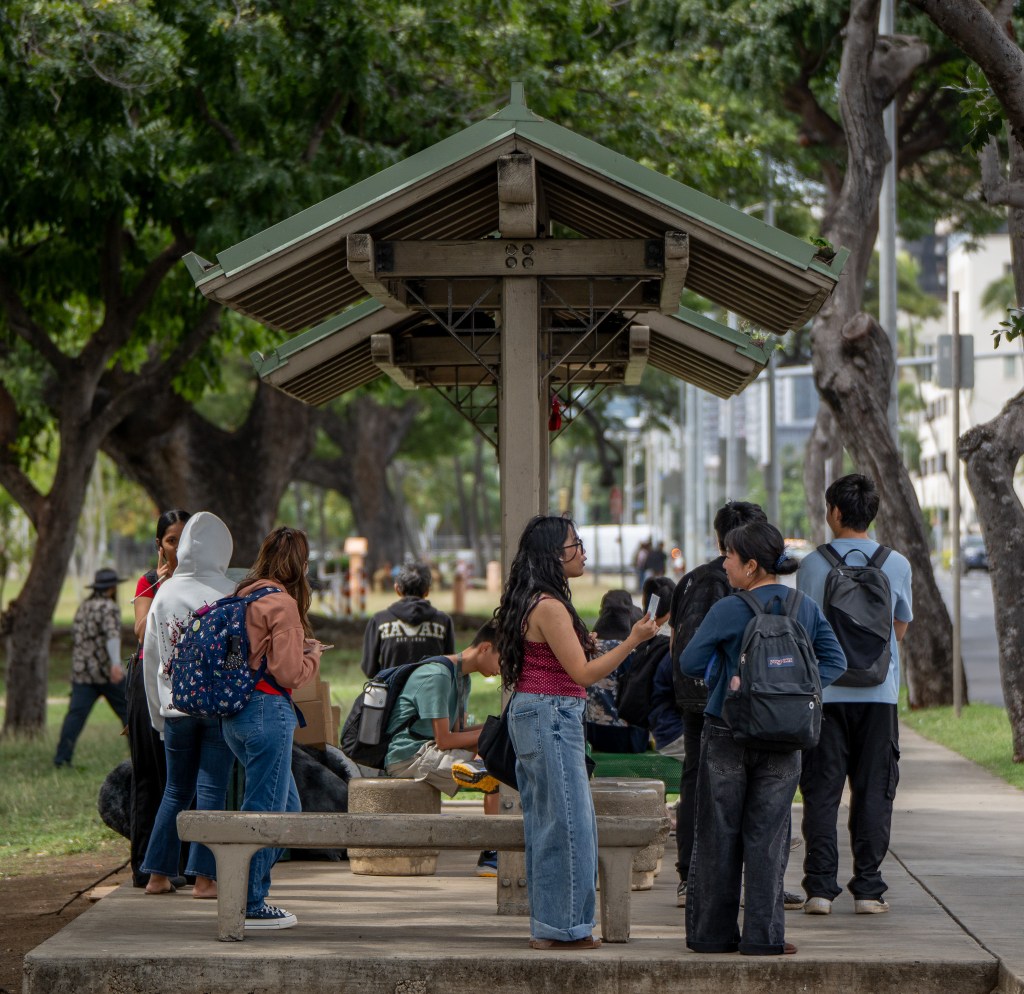
“Working with kids, showing that you can take the bus, and this is reliable, and it could save you time and traffic, I think that’s something that’s very powerful,” she said.
Hokoana supports the idea of student discounts for public transportation, saying that her son, who is starting high school in the fall, will be taking the city bus to school for free through the Department of Education’s EXPRESS County Bus Pass Program.
But she acknowledged that she felt nervous for him, with safety remaining her number one concern, another barrier cited in the report.
She recalled an instance two years ago when she was taking the bus from Waipahu to Waiʻanae with her daughter, who was five years old at the time. A man who appeared to be homeless started urinating on the bus, and her daughter bombarded her with questions.
Taking the bus means “exposing my kids to different life situations that I might not be comfortable explaining at the time,” Hokoana said.
Last year, the City Council passed a bill to address public transit safety by banning passengers whose belongings emit noxious odors or who ride with no destination in mind, explicitly targeting the homeless population.
Although according to the 2025 Public Transit Title VI Program report by the Department of Transportation, 89% of Oʻahu’s population lives within a half-mile radius of a bus route, Boksanski said women Appleseed has worked with on transportation issues have described an array of worries about safety that include walking to a bus stop late at night, limited lighting and waiting for a bus without knowing whether it will arrive on time.
“For many people, they do have access to alternative transportation options,” Boksanski said, “but there’s definitely barriers there that make it hard to get to the bus stop and get on the bus or walk down the street.”
Costs Constrict Life
For Hokoana, the report reflects another unpleasant truth: Half of all residents said transportation costs negatively impact their ability to reach essential and recreational destinations.
When it comes to activities such as family gatherings or birthday parties her kids get invited to, “I’m having to decline a lot of invitations,” Hokoana said.
“It’s summertime and I’d love for them to be able to go, but we don’t have a car in the daytime, and it’s selfish to ask their dad, ‘Hey, can you take off work so the kids can go have fun?’”
It would be ideal to get a second car, but Hokoana cannot imagine how she would pay for it, let alone maintain it. What she wants is a $1 shuttle, or a van service, which could take her to the grocery store and back during the day.
Instead, on the summer days when the car is gone and the bus feels too expensive, Hokoana and her kids go for walks — or just stay home.
Civil Beat’s reporting on economic inequality is supported by the Hawaiʻi Community Foundation as part of its work to build equity for all through the CHANGE Framework; and by the Cooke Foundation.