Wespac Stacks Seats With Fishing Industry Players As Marine Protections Erode
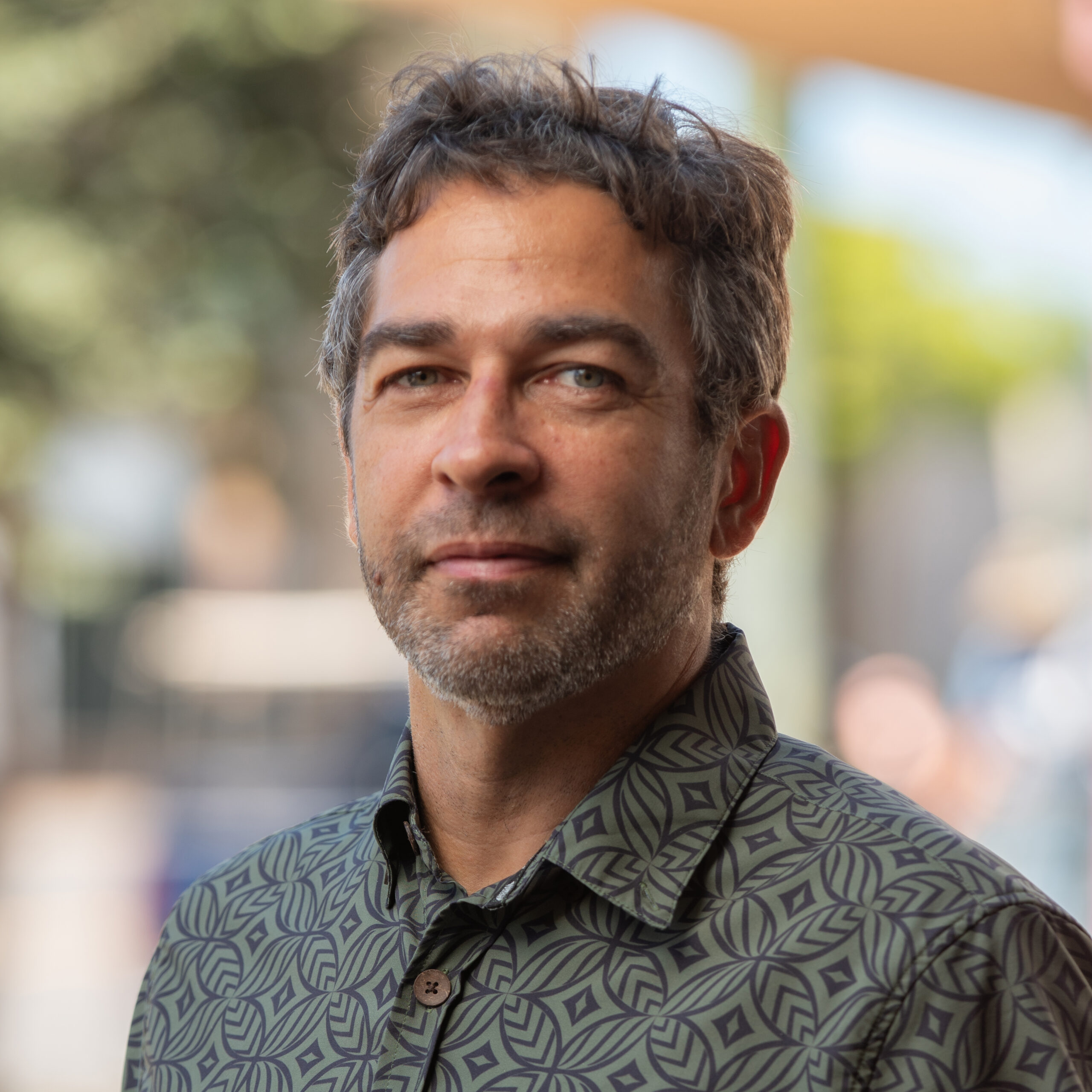
The Hawai‘i Longline Association’s Eric Kingma and Roger Dang will join the fisheries management council next month.
As the Trump administration works to open commercial fishing to U.S. fleets across the Pacific, some of its strongest allies in that push will soon fill open seats on the influential council that oversees fishing grounds around Hawaiʻi and the Western Pacific.
Last week, the Western Pacific Regional Fishery Management Council, known as Wespac, announced Eric Kingma, executive director of the Hawaiʻi Longline Association, has been appointed to one of its at-large seats.
Roger Dang, a Hawai‘i Longline Association director, was re-appointed to the council’s other open at-large seat. Dang owns a stake in multiple longline boats, part of a fleet that sees some $125 million in annual landings sold fresh at auction. Both men officially join Aug. 11.
Gov. Josh Green, who submitted Kingma and Dang for consideration along with two other candidates, and Kitty Simonds, Wespac’s longtime executive director, each pointed to the men’s combined, extensive experience in the seafood business, plus fishery management and policy.
However, Wespac’s latest industry-tilted appointments are raising concerns among local conservation groups at a time when robust protections to the Pacific’s vast but fragile marine ecosystems are being rolled back, largely at the behest of commercial fishing interests.
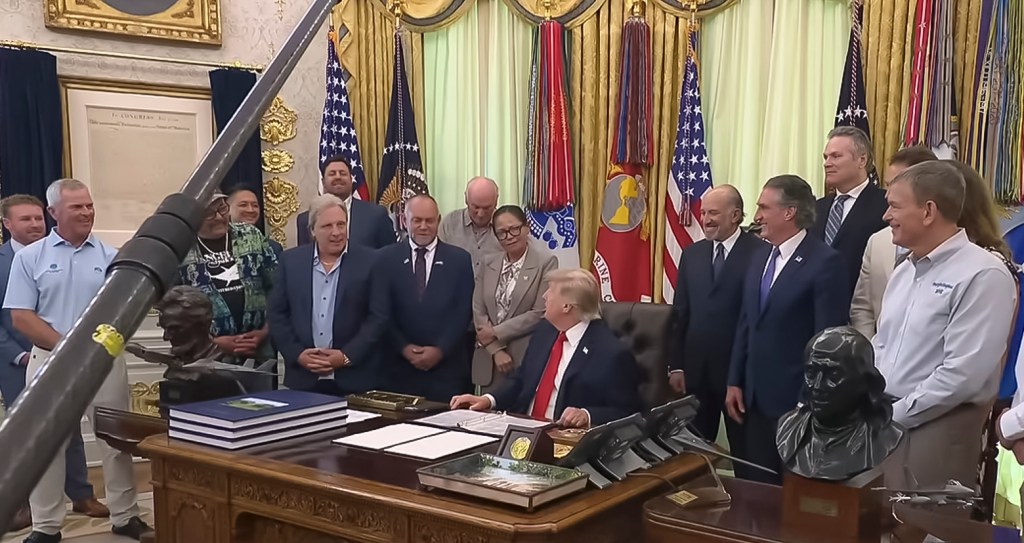
Kingma and Dang were among those gathered in the Oval Office last month when President Donald Trump signed a proclamation lifting the restrictions for U.S. commercial fishing fleets around Hawaiʻi’s Papahānaumokuākea Marine National Monument, long heralded as a model to help sustain marine resources, plus two other Pacific monuments.
Simonds attended a similar Oval Office signing ceremony with Trump last year, in which the president proclaimed a separate monument, Pacific Islands Heritage, open to commercial fishing.
All of those moves now face intense legal scrutiny and challenges from conservation groups, who say Trump overstepped his authority in reversing the commercial fishing bans.
“I’m a little disappointed in the governor,” said William Aila, a former state Department of Land and Natural Resources director and Native Hawaiian member of Papahānaumokuākea’s Cultural Working Group.
Aila said Green “could have struck a balance with having somebody much less assertive for fishing in areas that he’s supportive of continuing to protect.”
U.S. Commerce Secretary Howard Lutnick appointed Kingma and Dang largely based on Green’s list. Green also submitted two other choices: Native Hawaiian fisherman and fishing policy adviser Gilbert Kualiʻi and longtime Hawaiʻi longline vessel operator John Myking.
Conservation voices aren’t just heavily underrepresented on Wespac, Aila said, but cultural voices as well.
Among the candidates Lutnick passed up from other Pacific regions was Cecilio Rauikiulipiy, a traditional canoe navigator from the voyaging mecca of Satawal with extensive knowledge of cultural fishing practices and management.
At last month’s signing ceremony, Lutnick and other top officials, including Interior Secretary Doug Burgum, erroneously stated the monument fishing restrictions keep U.S. fleets out of those waters but allow foreign fleets to access them.
“They were closed to us and open to others, and that makes no sense,” Burgum said, speaking over Trump’s shoulder. “We’ve reversed that around.” Monument regulations, however, bar all commercial fishing in those waters.
Neither Kingma nor Dang responded to requests for comment on their appointments.
Green’s office, in response to a request to discuss the governor’s choices for the Wespac seats, emailed a message restating all four of his nominees’ qualifications.
Still On The Hook For Misspent Funds
Wespac, under federal fisheries management law, is obligated to fill its council seats with fishery stakeholders. However, the regional council has long faced criticism that it favors commercial fishing and mostly fills its seats with nominees related to that industry.
Only one of the council’s current 13 voting members, Conservation International Hawaiʻi Program Director Matt Ramsey, comes from the environmental community. Ramsey’s three-year term ends next year.
Kingma’s predecessor at the Hawaiʻi Longline Association, Sean Martin, chaired the council for years. Both he and Kingma regularly joined Simonds in lobbying against the creation and expansion of federal marine protected areas across the Pacific under Trump’s predecessors. Martin attended the recent Oval Office signing alongside Kingma.
“It’s really the function of any government advisory panel to provide balanced advice to the decision-makers,” Aila said of the industry-heavy Wespac council, “and that is clearly not the case before us now.”
Wespac has taken heat for questionable spending out of a special sustainable fisheries fund, and using much of those dollars to benefit contractors that support council positions such as its opposition to the monuments.
A 2021 federal Inspector General’s audit found $1.24 million in questionable Wespac spending between 2010 and 2019, out of the $7.4 million total it received during that time. Federal fisheries officials later determined it had mishandled more than $800,000 of that money and required the council to pay it back.
Years later, it’s still not clear how much, if any, Wespac has paid back despite years of pressure from congressional representatives to do so. Last month, California Rep. Jared Huffman asked Tim Petty, assistant secretary for oceans under the National Oceanic and Atmospheric Administration, whether the agency had recovered all of that money.
“We were just working through that process now,” Petty responded.
Huffman then asked if any of the money had been recovered. Petty said, “there has been some restoring taking place as well” and told Huffman he would get him a full accounting later.
Neither Huffman’s office nor the office of Hawaiʻi Rep. Ed Case, who’s also been vocal about recovering those funds, responded to requests for an update on the Wespac repayment last week. A NOAA spokesperson said the agency wasn’t able to provide an update last week but would respond later.
Access To Hawaiʻi’s ‘Insurance’ Fish
Wespac’s announcement of Kingma and Dang’s appointments said the two men would work on the council as federal fishing policy “continues to evolve,” and noted Trump’s recent orders to reopen monument waters to U.S. commercial fishing.
The longline association was recognized in 2023 by the global nonprofit Marine Stewardship Council for using sustainable fishing practices. Alongside Wespac, it’s argued for years that fishing regulations under the federal Magnuson-Stevens Fishery and Conservation Act are sufficient.
They’ve also asserted longline vessels can help monitor for any illegal fishing in the monuments – if the longliners are allowed to fish in those waters themselves.
The goal of lifting the monument restrictions, both Wespac and Lutnick said last week, would be to reduce the country’s estimated 80% reliance on imported seafood.
“In the end, we are going to eat fish caught by us. What a shock!” Lutnick said during last month’s Oval Office ceremony.
However, Aila and other conservationists note that Hawaiʻi’s longline fleet consistently hits its annual catch limits on ahi and other prized pelagic fish despite those restrictions and being forced to stay out of federally protected monument waters.
The Honolulu-based fleet had caught 36% of its 2026 quota for bigeye tuna, which has nearly doubled to 6,554 tons in recent years, as of May 18, according to the most recent data reported by NOAA.
Keeping those protections around the 500,000 square miles or so of Papahānaumokuākea’s outer areas plus the other monuments help ensure Pacific tuna stocks remain sustainable, conservationists say.
“It’s not like they’re not making quotas because the areas are closed off to them. They’re still making money. They’re profitable,” Aila said. “So why do they need to take the insurance fish that are part of the insurance policy and reduce that insurance? It makes no sense to me. It’ll benefit them in the long run.”
Civil Beat’s coverage of climate change and the environment is supported by The Healy Foundation, the Marisla Fund of the Hawai‘i Community Foundation and the Frost Family Foundation.