

Hawaiʻi Spent Millions On More Preschool Seats. Now, There Are Fewer
Hawaiʻi has fewer preschool seats than it did six years ago when lawmakers set out to fulfill their promise of universal preschool access. What did families and providers gain — and lose — from the state’s multimillion-dollar investment?
In 2020, Hawaiʻi lawmakers made an ambitious promise: Every 3- and 4-year-old in the state would have access to preschool by 2032.
At a time when only about half of those kids were attending preschool, and parents were spending thousands on private tuition, state leaders promised to improve the lives of working families and tackle Hawaiʻi’s high cost of living.
Six years, over $100 million and more than 100 public pre-K classrooms later, the results are in: Hawaiʻi has fewer preschool seats today than it did when it began.
The state had 25,426 seats as of August – roughly 2% fewer than what it had at the start of the decade, according to an analysis of state data by Civil Beat. That means for every public preschool seat the state has opened, it’s lost at least one in private programs.
Over the past three years, 40 traditional private preschool sites have closed and more are shrinking, with directors citing lower enrollment, staffing challenges and rising costs.
Thousands of individual families have benefited from increased access to free schooling because of the state’s expansion efforts. But the closure of private preschools means some communities have fewer options offering year-round care and catering to working families’ schedules.
“The state has never had more money in this sector,” said Kimberly Pierce, a private preschool director on the Big Island. “And we are not seeing any improvement.”
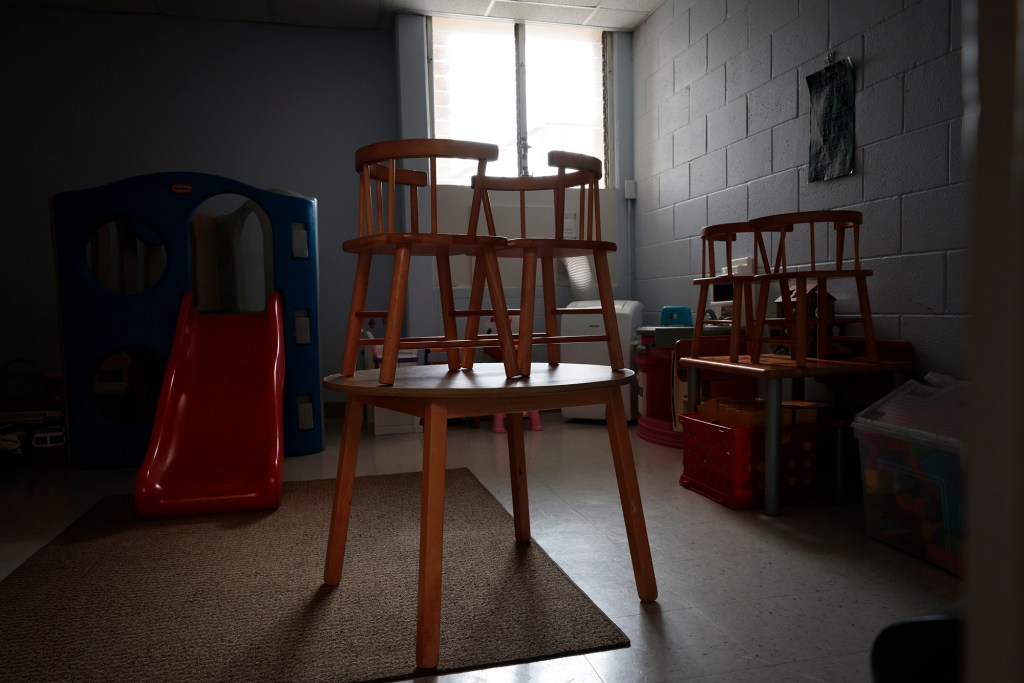
The bulk of the loss has come from preschool centers serving kids ages 2 and older, although the state has also seen a significant decline in small childcare programs typically operated out of private homes.
Hawaiʻi isn’t the first to report these changes. In California, a recent study found the state’s adoption of free, universal transitional kindergarten led families to move their 4-year-olds out of private preschool centers, destabilizing these programs and making it harder for them to care for younger children.
Hawaiʻi never meant for this to happen. It pledged to help private providers stay open by expanding robust tuition subsidies to both low-income and middle-class families. But families have struggled to access the expanded subsidies this fall, exacerbating providers’ worries.
In the end, the contraction of total pre-K seats might not hamper Hawaiʻi from reaching its goal of universal preschool.
Between declining birth rates and families being driven out of the islands by the state’s high cost of living, Hawaiʻi’s population of 3- and 4-year-olds fell by more than 10% between 2020 and 2025.
With fewer kids to serve, the state projects that nearly 82% of kids will have access to preschool next year, up from 63% in 2020.
Gov. Josh Green’s office referred questions about the initiative and its outcomes to the Executive Office on Early Learning, the state agency responsible for overseeing the expansion of public preschool. The Office of the Lieutenant Governor and Lt. Gov. Sylvia Luke, who was coordinating state efforts on preschool before taking an indefinite leave of absence this spring amid a bribery investigation, did not respond to requests for comment.
Early education advocates say families have still benefited from the state’s push for universal preschool.
“While we don’t have a net gain in seats, what we have is a tremendous gain in the level of affordability for families,” said Malia Tsuchiya, community liaison at Save the Children and longtime early education advocate in Hawaiʻi.
Still, the state must continue to invest in developing the teacher workforce and supporting private programs, Tsuchiya said.
Hard To Compete With Free
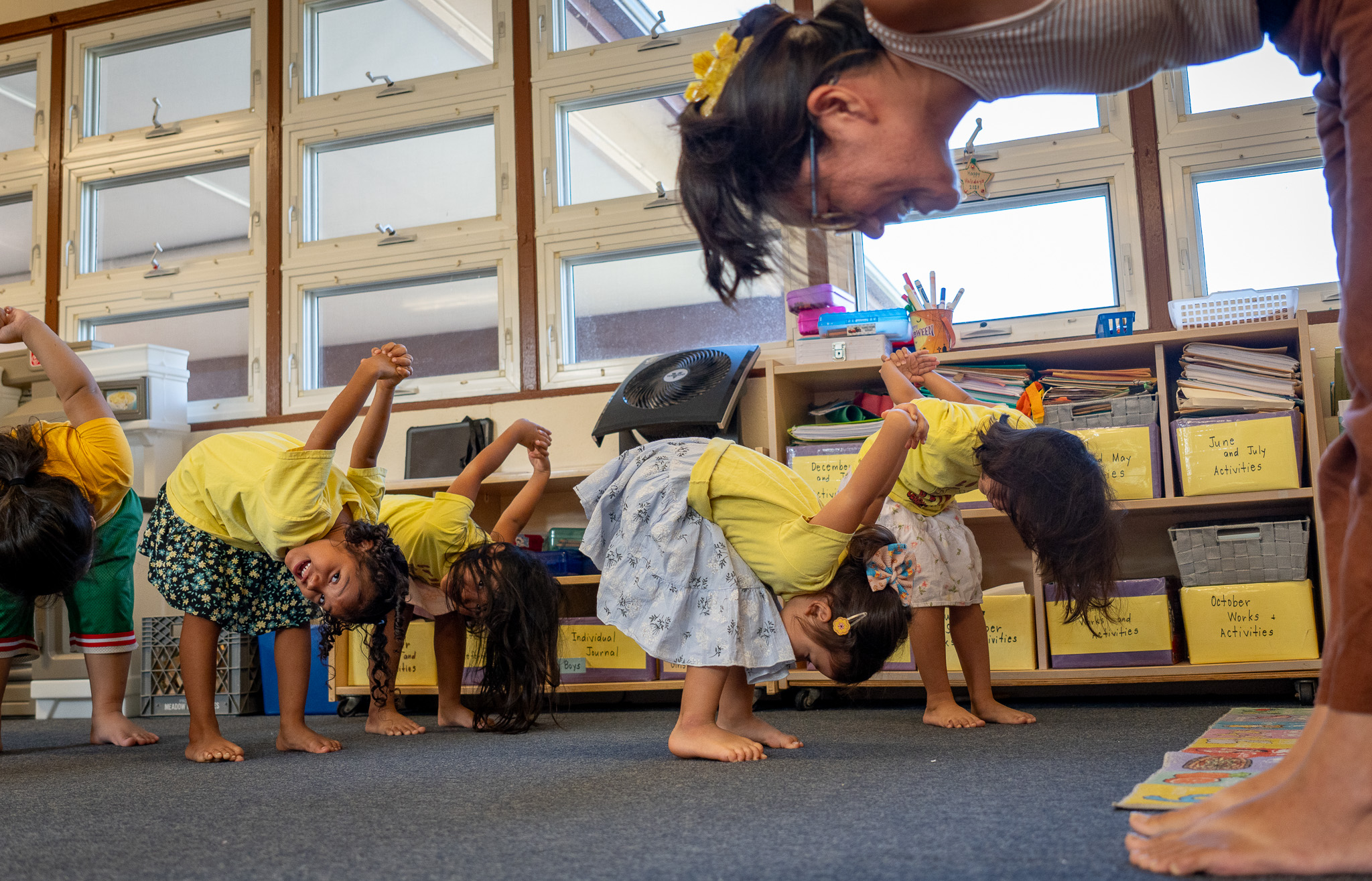
At Love A Keiki Learning Center in Kalihi, director Charity Caracol led a group of 11 kids in an energetic Hokey Pokey dance on a recent Tuesday morning.
Despite the bustling classroom and lively atmosphere, Caracol’s preschool has fewer kids than she would like. The program can serve up to 24 children ages 3 to 5, but it’s only enrolled 17.
There’s a number of reasons, Caracol said. The preschool moved campuses a few years ago. Tuition increased amid escalating costs. And more families seem to favor public preschool — one of which, Fern Elementary, is right across the street.
“For private, we do have to charge,” she said. “It’s a lot. It’s almost rent for most people.”
Private preschool directors say it’s hard to compete with the public programs.

The state has spent or committed $120 million in contracts to build public preschool classrooms in recent years. The classrooms are open to all 3- and 4-year-olds on a first-come, first-served basis. Schools prioritize children with special needs, English learners or those from homeless, low-income or foster families.
State leaders have long said families’ need for preschool far outweighs the supply, arguing that private programs will always attract some parents because of their extended hours and year-round schedules.
Civil Beat compiled data on the maximum capacity of programs for Hawaiʻi’s two largest sectors of early learning: private preschools and public preschools run on charter school and Department of Education campuses. Private preschools include group childcare centers, family childcare homes, group childcare homes and infant and toddler centers. Some of these programs serve children younger than 3, so Civil Beat’s count of the total number of preschool seats is likely an overestimate.
The numbers reflect the maximum number of students preschools can serve. But the state likely has fewer children enrolled, since some preschools lack the staff or demand to fill all of their available seats. Not included in these counts are special education and Department of Defense preschools, which made up roughly 15% of preschool seats last year.
But in some cases, providers say there are simply too many programs in communities with a limited pool of kids.
At Waiokeola Church Preschool in Kāhala, director Diane Mancini enrolled 80 kids in August – 20 fewer than last year, and 40 less than the school’s maximum capacity.
The preschool, which has been open for more than 60 years, is now one of eight public and private providers in a 2-mile radius.
“This year, we unfortunately had a lot of people that had signed up, and then we got phone calls: ‘We really love this, but we got into a free program,'” Mancini said.
In Waikīkī, Oscar Alvarado and his wife were weighing preschool options for their 4-year-old son earlier this year. Alvarado’s son was accepted into a nearby private school as well as Waikīkī Community Preschool, a free, state-funded program. The family couldn’t afford to pay more than $1,500 a month and opted for Waikīkī Community Preschool, Alvarado said.
“The reputation of this place is very high, so that’s why we really wanted it,” Alvarado said. “But also, it’s cost. There’s no cost.”
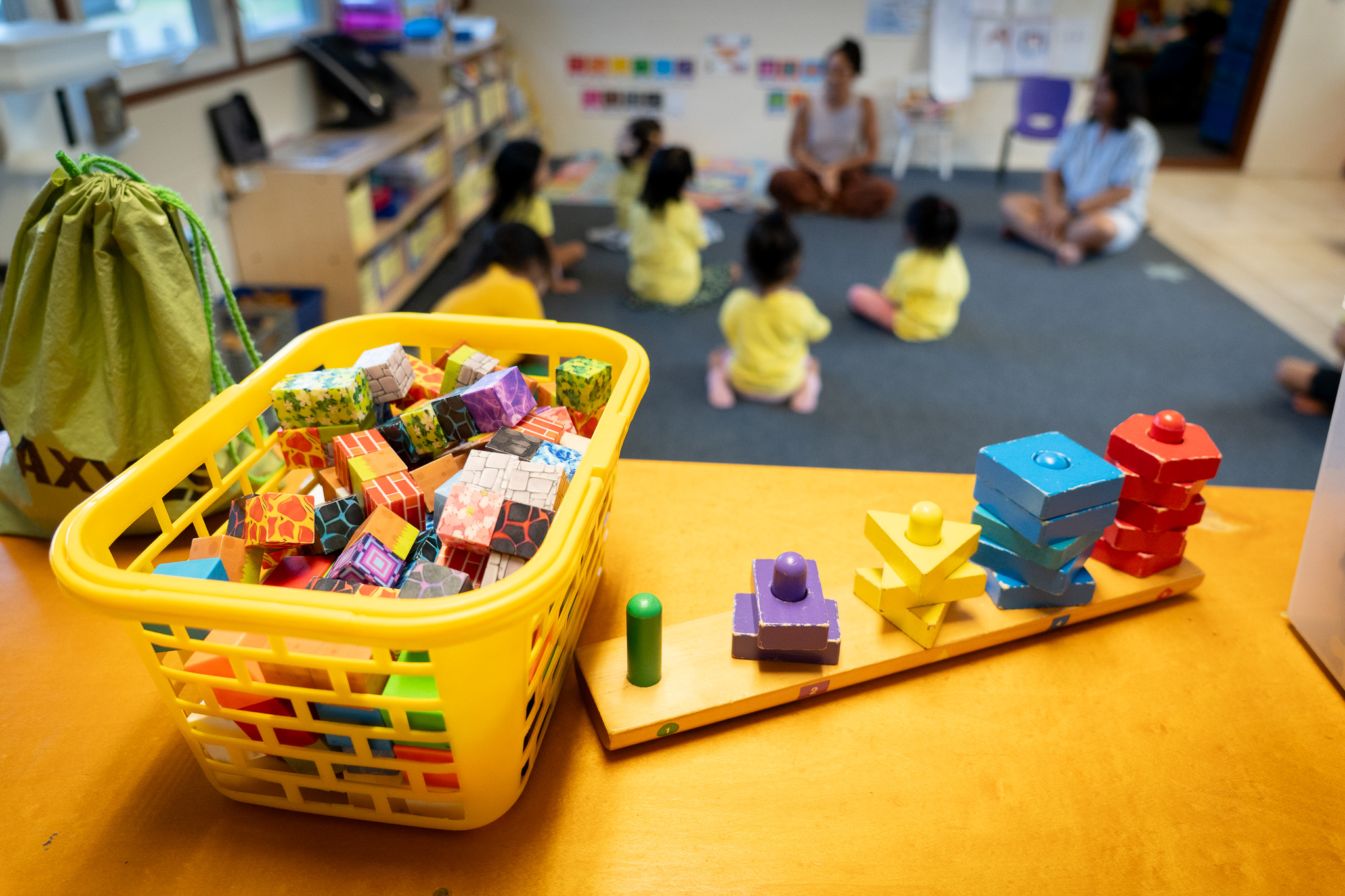
Some public preschool classrooms have opened in communities with few other options. For example, the public preschool classroom at Sunset Beach Elementary School is one of two options for families between Haleʻiwa and Kahuku.
Yuuko Arikawa-Cross, director of the state Executive Office on Early Learning, said her agency considers a number of factors when deciding where to place a public preschool classroom, including programs that already exist in the community. Elementary schools also need to have the space and willingness to add a preschool classroom to their campus, Arikawa-Cross said.
Last year, preschools operating under the Executive Office on Early Learning enrolled more than 1,800 kids, operating at roughly 80% capacity. The 33 preschool classrooms on charter school campuses —which are also state-funded and free to families — were at full capacity.
It’s difficult to say if the expansion of public preschool caused the downsizing or closure of private programs, said Remy Pages, an evaluation specialist at the Executive Office on Early Learning. While the office is studying these changes, Pages said, it’s hard to pinpoint a single factor.
At least six early learning centers in West Maui have also closed since the 2023 wildfires, decreasing the state’s supply by roughly 180 seats.
“To get a precise answer to this question is very difficult,” Pages said. “But we take this question seriously.”
Private and public preschools are also competing for a limited pool of qualified staff amid the state’s ongoing shortage of early educators.
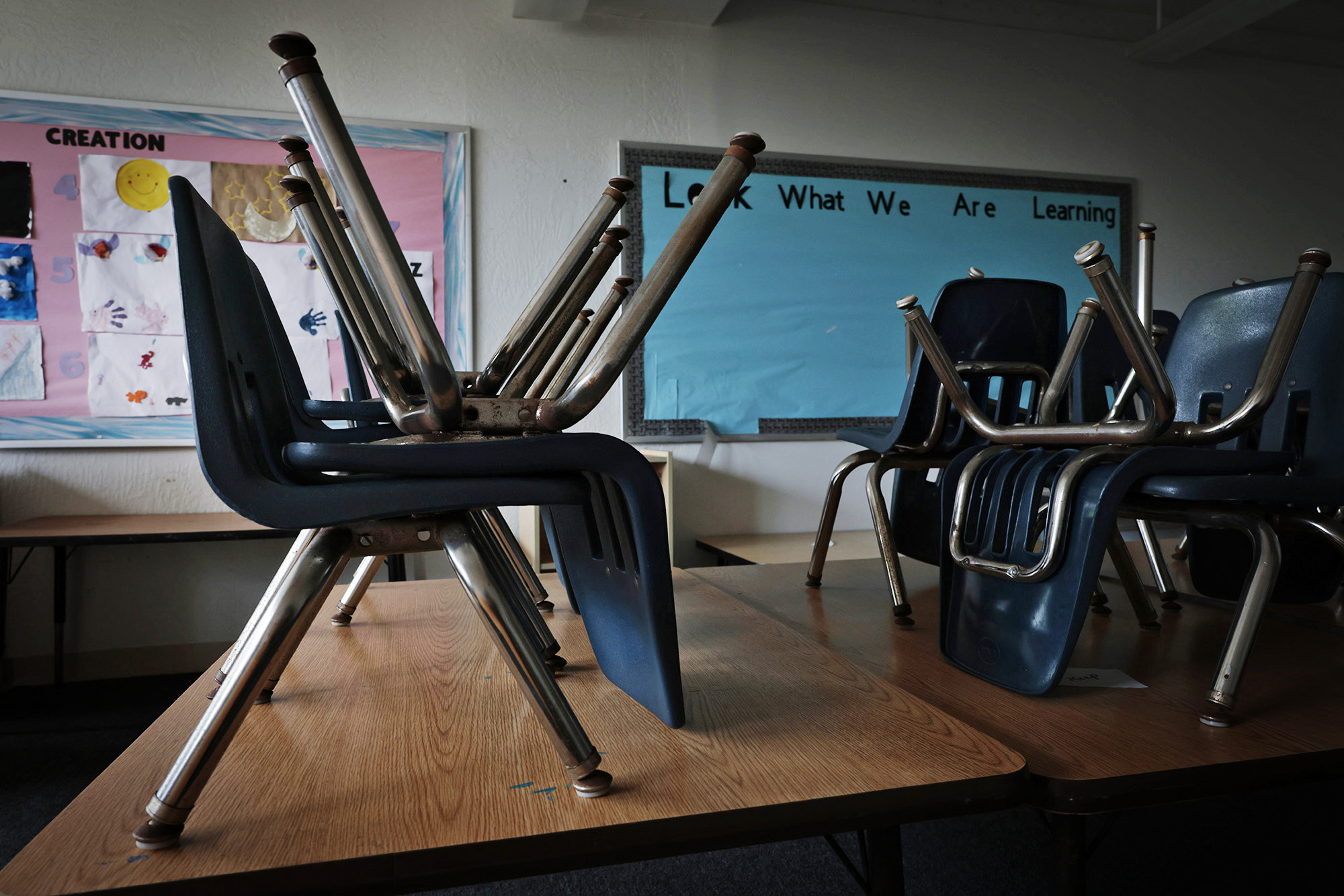
In Kaimukī, a set of classrooms sits untouched at Waiʻalae Baptist Church, with small plastic chairs stacked on desks and empty wooden cubbies lining the walls. Small pieces of double-sided tape sit on the walls where posters have been pulled down, and a blue bulletin board titled “Look What We Are Learning” has been stripped of student work.
The church closed its preschool last summer after nearly 20 years of serving families, senior pastor Matt Sanders said. The preschool struggled with staff turnover, partially due to low pay, and couldn’t find enough qualified teachers who were also active members of local churches.
Other preschools are facing similar challenges. Even at programs that have remained open, some directors say it’s difficult to find and retain teachers because of the demands of the job and the limited pay they’re able to offer. In some cases, teachers may move from private to public preschool because the pay and benefits are much better in state-run programs.
“I think part of the issue was a concern to keep our prices affordable while at the same time trying to compensate your faculty,” Sanders said. “But that becomes a losing game if wages are increasing everywhere else.”
More Subsidies, More Enrollment?
State leaders have emphasized that Hawaiʻi won’t achieve universal access to preschool by solely relying on public options. So at the same time lawmakers invested millions into building new preschool classrooms, they also expanded Preschool Open Doors, which provides tuition subsidies for families attending private programs.
The program offers a break to families making up to 500% of the federal poverty level – roughly $190,000 annually for a family of four. The maximum subsidy ranges from $1,200 to $1,500 a month.
In recent years, the program’s annual budget has more than doubled to $50 million and has grown from serving mainly 4-year-olds to children as young as 2. Last year, the program served more than 3,800 kids – a more than 500% increase from 2022.
The subsidies have been a blessing for private preschools, said Paula Yanagi, director of Ka Hale O Na Keiki Preschool on the Big Island.
“If we didn’t have Preschool Open Doors, we probably would not be here,” Yanagi said. “I think a lot of other preschools would be in that same role.”
But the program has faced delays this year, first with expanding subsidies to newly eligible 2-year-olds and then processing families’ applications this summer. Applications opened in late May — three months later than last year — giving the Department of Human Services just over a month to process thousands of families’ paperwork before the new school year.
Karrieanne Warren was ready to send her 3-year-old to Kalamapi’i PLAY School in Hilo this August. But the family has waited three months for the state to process their application, and they can’t afford to pay the tuition – $1,250 a month – upfront. In the meantime, she said, her son stays at home with family, and her husband is unable to take on more hours at the medical clinic where he works.
“My son is ready. He should be in school,” she said. “He should be making friends with kids instead of just hanging out with three adults all the time.”
The school is serving around 40 students this fall and has another 20 families who want to enroll but are waiting to hear if they qualify for a tuition subsidy, the school’s director said.
As of Sept. 1, more than 7,000 families had applied for Preschool Open Doors subsidies, Department of Human Services administrator Scott Morishige said in an emailed statement. So far, the department and its contractor have processed over 3,600 applications. The department is hiring more staff and training volunteers to review applications, he said, and will retroactively cover the costs of families’ tuition dating back to July or the start of their child’s preschool enrollment.
The Politics Of Preschool
Universal preschool is a popular platform for politicians, who can frame the initiative as not only supporting kids but also improving the cost of living for working Hawaiʻi families, said Colin Moore, a political scientist at the University of Hawaiʻi Mānoa. It’s a particularly favorable issue for lieutenant governors – including former Lt. Gov. Mazie Hirono and, more recently, Sylvia Luke – to champion because of the significant coordination needed among different branches of government, Moore said.
“It’s an excellent thing to have in your policy portfolio if you’re planning to run for governor later,” Moore said.
It may also be easier for lawmakers to fund initiatives that have a brick-and-mortar component – like increasing the number of preschool classrooms on public school campuses – than solving less tangible, long-standing issues like preschool teacher shortages, Moore said.

Recently, funding for public preschool expansion has slowed. Lawmakers set aside $20 million for the construction and renovation of new public preschool classrooms this year, less than the $32 million initially requested by the School Facilities Authority, the state agency tasked with building new classrooms.
Some lawmakers and preschool directors are divided on the best way to spend state money moving forward.
Preschool providers say it would be ideal for the state to cover a portion of their expenses and directly pay them for the services they offer families. But similar proposals have previously received strong pushback from the powerful teachers’ union and other public education advocates.
Rep. Amy Perruso said the state should be expanding public preschool more aggressively rather than subsidizing private providers. Perruso, who represents parts of Waialua and Wahiawā, said private preschool simply isn’t an option for parents in her community because of the high cost.
“If we’re going to use tax dollars, then it should be what is available to everybody,” said Perruso, a former teacher and union leader.
The state is also constrained in how much direct support it can provide private preschools because of its Constitution, which prevents public dollars from funding private education, Tsuchiya said. While the state can get around the provision by providing families subsidies for tuition or even converting private programs into state-funded charter schools, its reach is limited, Tsuchiya said.
Was This Worth It?
Despite the loss in preschool seats, some families say the state’s investments have paid off.
Parent Danielle Alefosio said there are more high-quality, affordable programs for her youngest daughter, age 4, compared to the options when her older children were starting school. Alefosio’s daughter attends Parkway Village Preschool, a free public preschool in Kapolei.
Over the past year, Alefosio said, her daughter’s speech delay has improved through weekly sessions with a therapist at school, and she’s developed important skills like learning to wait in line and listening to her teachers.
“She looks forward to going to school every single day,” Alefosio said, adding that she would like the state to continue to expand public preschool options in more communities.
Overall, more families are paying less for early childhood education, said Vivian Eto, interim executive director of the advocacy group Early Childhood Action Strategy. At the same time, she said, the state can do more to support private preschool providers, such as expanding teacher training programs and continuing to invest in tuition subsidies.
“I think we are living in a better scenario than we would have been without,” Eto said about the state’s efforts to increase access. “And there’s a lot more work that we can be doing.”
Pierce, the preschool provider in Hilo, said it’s important for families to have a variety of early learning options, adding that communities will likely benefit from state efforts to support both public and private programs.
“But,” Pierce said, “we’ve got to do it right.”
