High-Need Foster Kids Now Have An Alternative To Staying In State Offices
Officials say they hope a new Oʻahu home will ensure hard-to-place foster children don’t need to sleep in government offices or hotels in the future.
Foster children without placements are no longer sleeping in government offices or hotels thanks in part to a new residential program launched by the Department of Human Services last month to help temporarily house and rehabilitate the most difficult-to-place youth.
The issue of kids sleeping in offices and hotels has plagued the department for years and even sparked the creation last year of an internal task force aimed at finding alternative solutions after Civil Beat wrote about it for a second time.
Now, about a year after the task force’s formation, Department of Human Services Deputy Director Trista Speer says the new program, called Keiki Now, will serve as a temporary home for kids who have been surrendered by or taken away from their parents or caregivers until they can be placed back with a family.
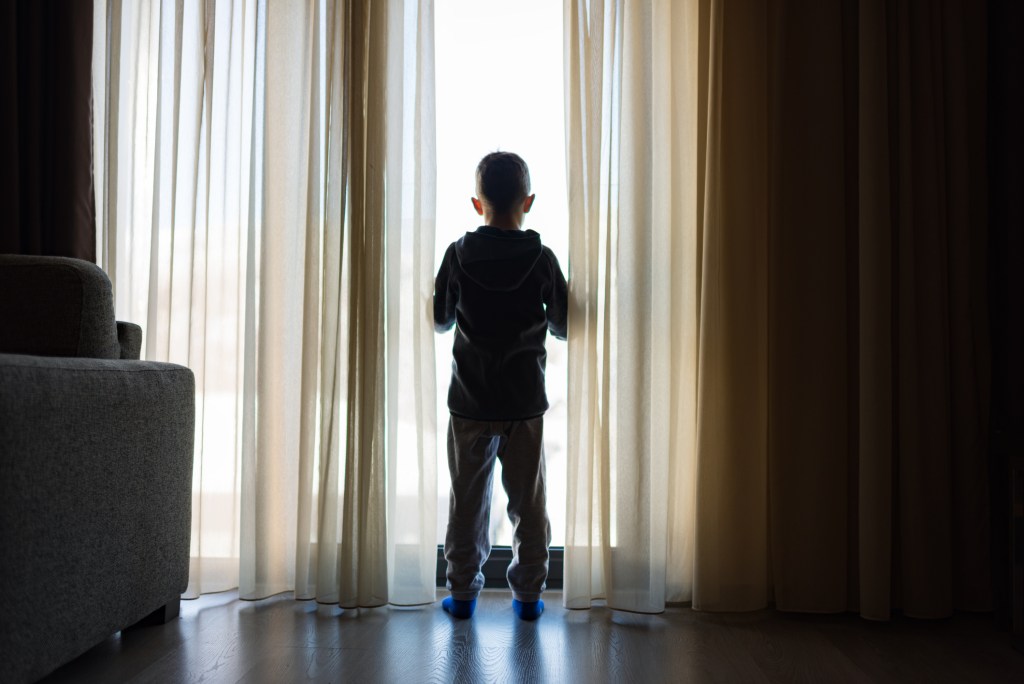
The department began leasing an 18-bed facility on Oʻahu at the beginning of August staffed around the clock with behavioral health professionals and other clinicians from Pacific Health Alliance, a Hawaiʻi-based healthcare nonprofit. The pilot program will cost about $3.2 million in its first year, though some of that will be reimbursed by medical insurance, including Med-QUEST, the state’s Medicaid program, Speer said.
The last time a child slept in an office was on Aug. 2, according to Karlan Fields, the department’s social services division administrator.
Speer would not say where the facility is located on Oʻahu but said it is also open to kids from other islands. It is designed to handle children with the highest needs, including those with behavioral issues, developmental disabilities and trauma.
Even as the number of youth in the foster care system overall has gone down in recent years, the department has struggled to find enough foster families to care for children with the highest needs.
Between 2023 and 2025, more than 30 children slept in Department of Human Services offices or state-funded hotel rooms for spans ranging from one night to two months. In most of those cases, the children had been given up by foster families who were not equipped to handle their needs, or they were taken from families due to abuse or neglect.
Before the Keiki Now program, there was often nowhere else for these kids to go, Speer said. The department has a partnership with Hale Kipa, which provides emergency shelter space for children in ʻEwa Beach but can’t always take in additional children if it is at capacity.
Keiki Now will hopefully fill that much-needed gap, said Leina Ijacic, CEO and founder of Pacific Health Alliance.
“We believe that the keiki need therapeutic supports,” she said. “So each one of our team are trained in crisis intervention and management. They are trained in how to de-escalate situations and to teach the kids through those experiences.”
Vulnerable Youth
In 2023, 14 Hawaiʻi children slept in government offices or hotels for various periods of time, an uptick over previous years.
Agency officials at the time said the trend was due to a confluence of factors, including a lack of foster parents and an increase in the number of children with severe mental health or behavioral needs, likely due to the mental health impacts of the Covid-19 pandemic.
Two years later, the problem persisted, and then-department Director Ryan Yamane created a task force to address the issue. The task force met only three times, according to records obtained by Civil Beat through a public records request, but members discussed the extreme challenges employees faced by workers tasked with caring for kids in offices.
Staff, paid overtime to watch children overnight, were getting burned out due to challenging behaviors, according to meeting notes, and the department spent $63,000 on overtime in September 2025 alone.
State Rep. Daisy Hartsfield, then an administrator with DHS, helped lead the task force. She said in an interview that one staffer was assaulted by a child while caring for them in an office. Another child dented a staffer’s car and broke a window.
“When you sign up for the job, you are aware of the risk,” she said. “But you don’t realize the physical and emotional trauma that you get exposed to.”
Workers were also extremely concerned about the well-being of the children and knew an office was not an ideal living space for them, she said.
The main issue driving the problem is a lack of foster parents equipped to handle children with the most complex needs, according to meeting notes.
“It’s not new, but we really can’t place these unstable children with such traumatic histories in resource homes until they stabilize,” according to notes from an Oct. 15 meeting. “They’re in our office because their behaviors/trauma are more than the average person can manage, even with supports in place.”
Venus Rosete-Medeiros, president and CEO of Hale Kipa, said the shelter has been seeing more youth who require high levels of support and dealing with issues such as substance use disorders and depression. The shelter has space for eight boys and eight girls, but sometimes will max out at a lower number if the children require additional attention. The length of stay is supposed to be three months, she said, but some stay longer, including one child who has been there over two years.
Rosete-Medeiros said she thinks the rising cost of living has put immense stress on families and contributed to declining youth mental health.
“Families are struggling to make ends meet,” she said. “I think that the stress and the pressure can create behaviors that might not be appropriate in the home or with children.”
She was excited to hear about DHS’s program to help children who need the highest levels of care.
“It’s not just a bed to sleep in. These young people really need therapeutic support,” she said. “Hale Kipa, we remain committed to being being part of that solution, but emergency shelters cannot become a long-term placement by default.”
The monthly average number of children in foster care dropped from 1,555 in 2021 to 860 in 2025, according to the most recently available data from the Department of Human Services.
Still, “you need qualified workers who can address the high needs, as well as qualified families who can address the high needs,” Hartsfield said. “It’s hard to attract families when, if something goes wrong, the fingers get pointed at them.”
A Homelike Setting
A team of 35 professionals is working on the Keiki Now program, Ijacic said. They include behavioral health technicians, certified nursing assistants, registered nurses, a pediatric psychiatry nurse and an activities coordinator who has already arranged outings to a roller skating rink and the Honolulu Zoo.
The program is currently caring for six kids ranging in age from eight to 17. How long they stay depends on each child’s situation, Ijacic said.
“Ultimately, the goal is always reunification with the children’s family.”
Deputy Director Trista Speer
There are four to five staff members on site at minimum around the clock, and eight or nine in the afternoons and evenings when the kids get home from school, Ijacic said. Staff also help connect the children to outside medical providers if they need additional specialized care, she said.
The site consists of multiple three-bedroom homes and an outdoor space for eating and activities, she said. Staff are also trained in crisis management and deescalation techniques to deal with difficult behaviors. She said she hopes the setting can be a place for children to heal and grow until they can be placed in a more permanent home.
Speer declined to discuss individual cases but said the children currently in the program are “thriving.”
“Ultimately, the goal is always reunification with the children’s family …,” she said, “ and if not that, a permanent placement.”