The Ala Wai Canal Needs More Than Floodwalls
Honolulu should treat the Ala Wai not as a single flood-control project, but as an integrated watershed and canal modernization project.
October 29, 2026 · 7 min read

About the Author

The Ala Wai Canal is one of Honolulu’s most familiar landmarks, but it is also one of its most misunderstood pieces of infrastructure.
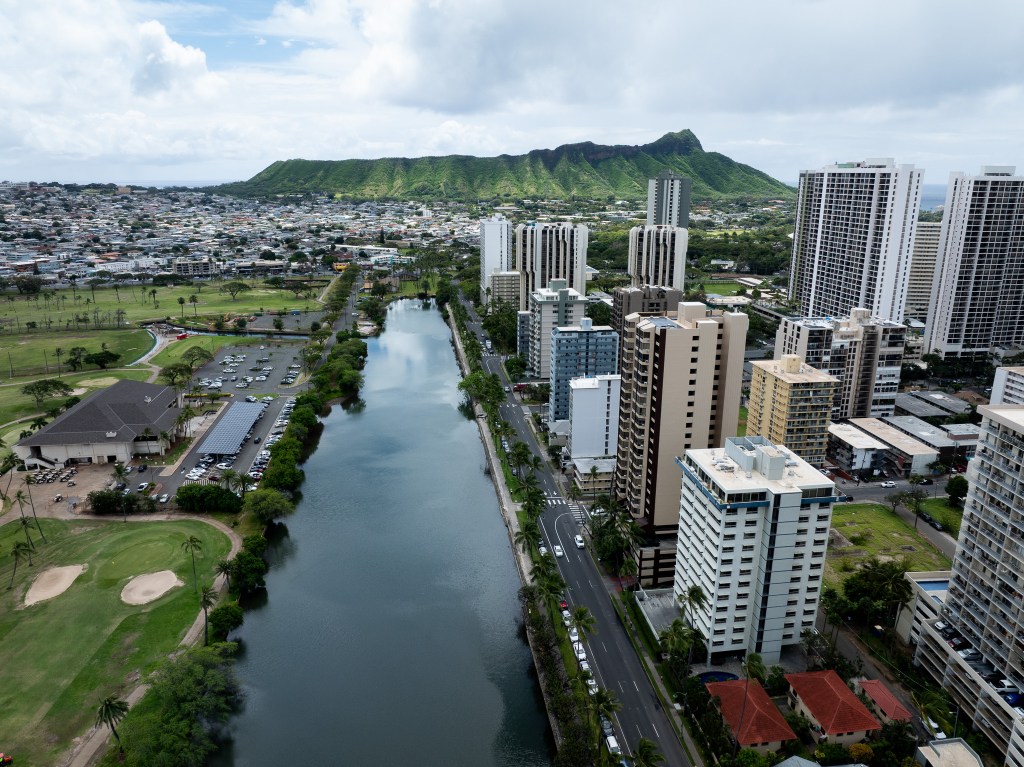
To residents and visitors, it appears to be a scenic waterway separating Waikīkī from Mōʻiliʻili and McCully. To engineers, planners and emergency managers, it is something more serious: the final outlet for a steep, fast-moving watershed that drains Makiki, Mānoa and Pālolo toward one of the most densely developed and economically important districts in Hawaiʻi.
That system is under strain. The canal was built in the 1920s to drain Waikīkī’s wetlands and make development possible. It was not originally designed as a modern flood-control system.

Ideas showcases stories, opinion and analysis about Hawaiʻi, from the state’s sharpest thinkers, to stretch our collective thinking about a problem or an issue. Email news@civilbeat.org to submit an idea or an essay.
Nearly a century later, the surrounding area has changed beyond recognition. Waikīkī is now a tourism engine, Mōʻiliʻili and McCully are heavily urbanized, and stormwater from the Ko‘olau slopes still has to go somewhere when intense rains arrive.
The most urgent problem is flood risk. A severe storm in the Ala Wai watershed could send water rapidly through narrow stream channels and into the canal. The canal has only one ocean outlet, at the Ala Wai Boat Harbor. The second outlet originally contemplated for the canal was never completed. That single-outlet condition leaves the system with limited flexibility when large flows arrive quickly.
The risks are not theoretical. The 2004 Mānoa flood damaged the University of Hawaiʻi campus and destroyed irreplaceable library materials. The 2006 sewage spill sent millions of gallons of wastewater into the canal after a major sewer line ruptured.

King tides have already shown an inequity built into the canal’s geometry: the mauka side is lower than the makai side, meaning Mōʻiliʻili and nearby areas are more exposed to overtopping than Waikīkī.
The U.S. Army Corps of Engineers has studied the Ala Wai flood problem for more than two decades. Its current flood-risk plan relies heavily on floodwalls, including walls around the canal, selected upstream locations and the Ala Wai Golf Course detention basin.
The plan is serious, data-driven and backed by extensive modeling. It also reflects a practical reality: some form of structural protection is needed.
But floodwalls alone do not solve the larger Ala Wai problem. They may reduce flood damage, but they do not fully address water quality, sedimentation, long-term canal maintenance, aesthetic impacts or the vulnerability created by having only one outlet. They also raise community concerns about views, access, canoe use and whether flood risk is being shifted from one area to another.
Honolulu should treat the Ala Wai not as a single flood-control project, but as an integrated watershed and long-term canal modernization project.
What We Should Do
A better long-term strategy would combine several measures.
First, floodwall design should address Mōʻiliʻili’s greater exposure. The mauka canal bank is about two feet lower than the makai bank, and the Mānoa-Pālolo confluence heightens flooding risks to nearby homes and schools. The mauka wall should be raised where warranted by hydraulic analysis.
The Ala Wai Golf Course could provide controlled detention, but uncontrolled overflow into Mōʻiliʻili is an imprudent flood-management strategy. Targeted upstream floodwalls are also warranted at bottlenecks such as Woodlawn Drive, where the vulnerability is documented.
Second, Honolulu should seriously evaluate a second canal outlet near Kapahulu Avenue. This is the central idea of the integrated proposal. A second outlet would restore, in modern form, a concept that was part of the canal’s early planning but abandoned.
By creating another path to the ocean, the canal would gain badly needed capacity and operational redundancy. During major storms, a second outlet could help move water out faster. During construction and future maintenance, it could allow sections of the existing canal to be isolated and upgraded without shutting down the whole drainage function.
This would not be simple. A new outlet under or near Kapahulu Avenue would require roadway reconstruction, rights-of-way, utility coordination, careful hydraulic design and environmental review. But complexity alone is not a reason to avoid a long-term fix. The current single-outlet system is itself a design limitation that Honolulu has inherited for almost 100 years.
Third, the canal should be modernized structurally. The existing canal walls are old, and sedimentation continues to reduce canal depth. Maintenance dredging is expensive, disruptive and recurring. Once a second outlet is available, the existing canal could be rehabilitated in sections using cofferdams.
Contractors could isolate portions of the canal, excavate accumulated material, repair or replace walls, and line the canal bottom with a more stable surface such as concrete. This would help preserve depth, improve hydraulic performance and reduce the frequency of major dredging campaigns.
Fourth, flood mitigation must be linked to water quality. The Ala Wai is not only a flood channel; it is an impaired urban waterway that carries sediment, trash, nutrients, bacteria and other pollutants toward the ocean. Any plan that protects Waikīkī from flooding while leaving the canal polluted is incomplete.
Several practical measures can help. Using beneficial microorganisms in “Genki Balls” to reduce sludge and improve water quality deserves more formal scientific monitoring and stable support rather than reliance only on volunteer energy. Invasive species control in the upper watershed should also be treated as infrastructure. Feral pigs and invasive plants contribute to erosion and sediment movement; reducing that damage helps preserve stream and canal capacity.
Trash and floating debris need a more systematic solution as well. Technologies such as spinning-cog debris systems or bubble barriers can guide plastic and other waste toward collection points before it reaches the harbor and ocean.
These systems would not eliminate bacterial contamination, but they would complement biological and watershed-level measures by reducing visible debris and marine pollution.
Imagine The Costs Of A Flood
The estimated cost of an integrated approach would be high — roughly in the billion-dollar range in preliminary estimates. That number will understandably concern taxpayers. But the relevant comparison is not between a billion-dollar project and doing nothing. The comparison is between proactive investment and the cost of a catastrophic flood in Waikīkī, Mōʻiliʻili, McCully, Mānoa and surrounding areas.
Waikīkī is not just a neighborhood; it is a statewide economic asset. A severe flood would affect residents, schools, businesses, hotels, transportation, public health and Hawaiʻi’s reputation as a visitor destination. The direct damage estimate from a rare major storm may understate the true economic disruption, especially when business interruption, cleanup, insurance disputes, infrastructure repair and tourism impacts are included.
Waikīkī is a statewide economic asset.
The Ala Wai debate should move beyond a narrow argument between “floodwalls” and “no floodwalls.” Honolulu needs a layered solution: targeted walls where necessary, a second outlet where feasible, canal rehabilitation, watershed restoration, debris control and water-quality improvement. No single measure will be enough.
The canal was built to make modern Waikīkī possible. Now modern Honolulu must decide whether to keep patching an aging system or redesign it for the next century. The choice should not be driven by fear of cost alone, nor by nostalgia for the canal as it appears today. The real question is whether we are willing to invest before disaster forces our hand.
The Ala Wai can remain a scenic landmark. It can also become safer, cleaner and more resilient. Achieving that will require treating flood control, environmental restoration and infrastructure renewal as one integrated challenge — because in the Ala Wai watershed, they cannot be separated.
 Sign up for our FREE morning newsletter and face each day more informed.
Community Voices aims to encourage broad discussion on many topics of community interest. It’s kind of a cross between Letters to the Editor and op-eds. This is your space to talk about important issues or interesting people who are making a difference in our world. Column lengths should be no more than 800 words and we need a photo of the author and a bio. We welcome video commentary and other multimedia formats. Send to news@civilbeat.org. The opinions and information expressed in Community Voices are solely those of the authors and not Civil Beat.
Read this next:
Local reporting when you need it most
Support timely, accurate, independent journalism.
Honolulu Civil Beat is a nonprofit organization, and your donation helps us produce local reporting that serves all of Hawaii.
ContributeAbout the Author