Hawaiʻi's Food Security Can Take Root In Our Own Neighborhoods
Honolulu residents should vote yes on Charter Amendment Question No. 1.
October 15, 2026 · 4 min read

About the Authors

Remember summer hanabata days when your next-door neighbor gave you Long’s bags full of mango? And you returned the favor when your lychee tree gave fruit?
That simple exchange represented something bigger — food was being grown in our own neighborhoods, shared among residents and woven into everyday life.
We still see that today, but not nearly enough. Much of our urban landscape simply isn’t designed around food production. Over time, we have lost trees, growing spaces and opportunities to produce food close to where people live.

Ideas showcases stories, opinion and analysis about Hawaiʻi, from the state’s sharpest thinkers, to stretch our collective thinking about a problem or an issue. Email news@civilbeat.org to submit an idea or an essay.
Maybe it’s time to reconnect some of those pieces. What if we stopped treating O‘ahu’s urban forest and our larger food system as separate challenges?
Food security has always mattered in Hawaiʻi. For generations, Native Hawaiians and other Pacific island peoples understood food production as part of a larger relationship among land, water, plants and people.
This idea is particularly timely as O‘ahu voters consider Charter Amendment Question 1 on the general election ballot this November.
Question 1 would establish a dedicated Food Security Fund to support programs and grants that provide locally grown or produced food to food-insecure Oʻahu residents, while allowing non-local food to be used in emergencies. The proposal would provide ongoing funding for food security without increasing property tax rates.
Similar to the Climate Resiliency Fund that voters approved in 2024, this fund would send a strong message to policymakers that residents consider this issue a priority and want government action backed by dedicated funding. Question 1 could also help communities explore ways to grow, distribute and share more locally produced food, including by making better use of the spaces where people live.
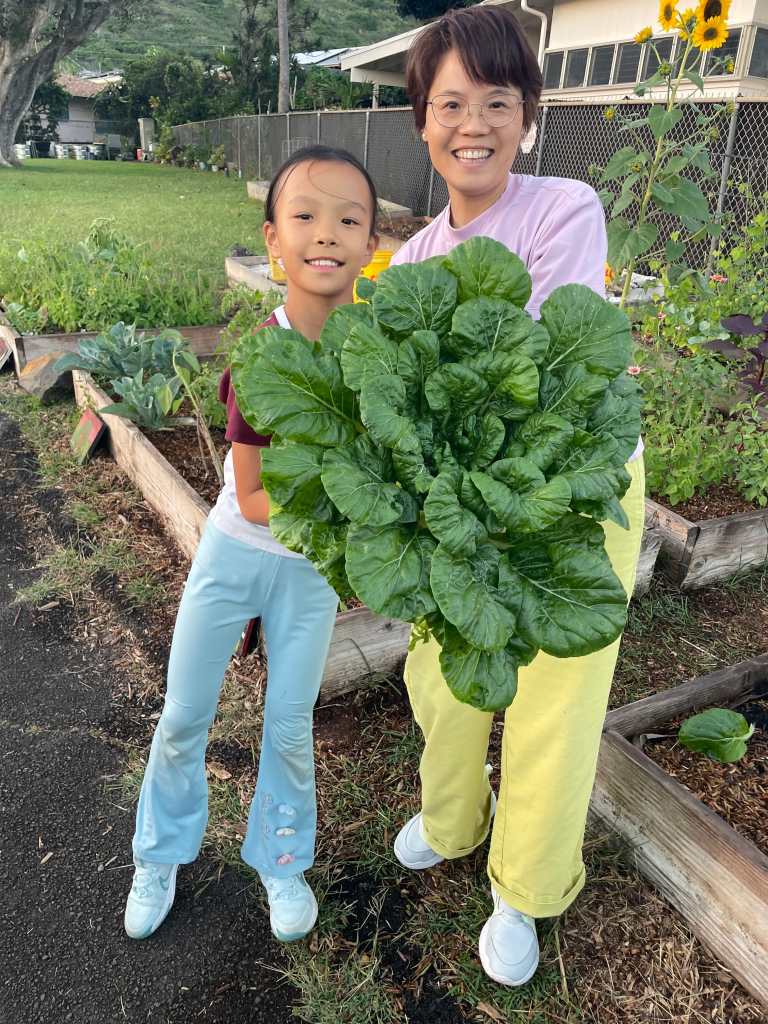
We can grow food not only on farms around the islands, but for those with the space, in our own yards. For those without yards, there are creative ways to grow vegetables and other food on lanai and in other limited spaces. And let’s not forget renters, who may feel they have few options for planting food-producing plants.
That is where a Food Security Fund could help connect the pieces — growing, caring for, distributing and eating locally produced food.
To be clear, not every tree should be a fruit tree, and not every location is appropriate for food production. Our guiding principle is “right tree, right place, right care.”
But where conditions are right, food-producing trees can be part of the urban forest rather than something separate from it.
Food is already being grown at many public schools. City community gardens are currently centers of local food production. Both could be expanded.
There are also ways to be creative growing food at places of worship, public housing, vacant or underused public land, and perhaps along streets. Led by communities and nonprofits, government can help amplify and connect these efforts by turning successful pilot efforts into larger projects.
We have already seen what can happen when we connect these ideas. A green infrastructure project initiated by Trees for Honolulu’s Future at Pālolo Hongwanji began with a simple goal: Capture water to irrigate an organic garden. It has since grown to include a home for the Family Education Centers of Hawaiʻi, which embraces youth and family gardening as a platform for education, engagement, and nourishment.
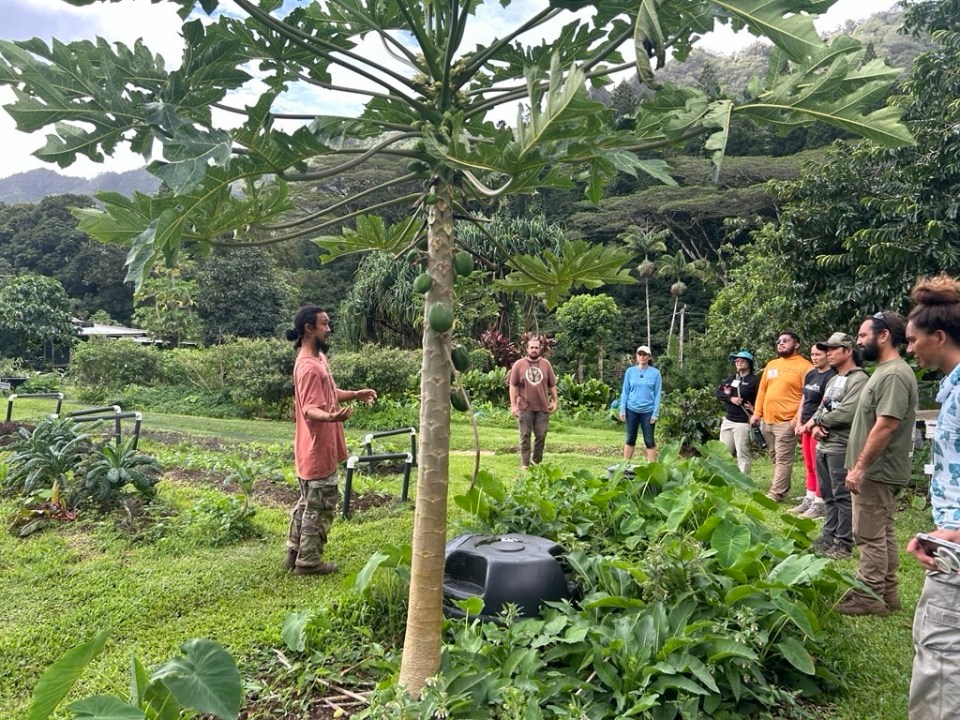
Kōkua Kalihi Valley is showing what a community-based food system can look like in practice. At Hoʻoulu ʻĀina, residents, youth, and families grow food through agroforestry and other practices, cultivating ʻulu (breadfruit), maiʻa (banana), and other crops while learning together about the importance of growing and sharing food.
Food grown on the ʻāina also helps supply KKV’s Roots Café and Food Hub, which connect Kalihi families with fresh, nutritious, and culturally meaningful foods.
Food production can happen at many scales.
Through these efforts, including access through SNAP/EBT, locally grown food becomes more accessible to households experiencing food insecurity. This is a virtuous cycle.
Our point is simple — food production can happen at many scales. Thousands of small interventions, combined with farms, food distributors, community-based nonprofits, health centers, schools and government programs can strengthen communities.
A food-producing tree can provide shade, help cool a neighborhood, capture rainwater, expand the urban canopy and produce something people can eat. A community garden can grow vegetables while also bringing neighbors together.
Programs that purchase locally produced food can support local agriculture while helping feed families facing food insecurity.
Our aspiration isn’t simply more food or more trees. It’s a neighborhood landscape where what we plant helps solve more than one problem.
 Sign up for our FREE morning newsletter and face each day more informed.
Community Voices aims to encourage broad discussion on many topics of community interest. It’s kind of a cross between Letters to the Editor and op-eds. This is your space to talk about important issues or interesting people who are making a difference in our world. Column lengths should be no more than 800 words and we need a photo of the author and a bio. We welcome video commentary and other multimedia formats. Send to news@civilbeat.org. The opinions and information expressed in Community Voices are solely those of the authors and not Civil Beat.
Local reporting when you need it most
Support timely, accurate, independent journalism.
Honolulu Civil Beat is a nonprofit organization, and your donation helps us produce local reporting that serves all of Hawaii.
ContributeAbout the Authors