Neal Milner: The Fight Over Oʻahu's Next Landfill Ends Here
Justice demands that the rest of us pay for the burden the landfill places on whatever community gets it. Stop kicking the trash can down the road.
October 5, 2026 · 6 min read

About the Author

Two Hawaiʻi disasters are happening right now. One is the aftermath of the floods and hurricanes.
The other is the never-ending struggle to find a place for a new landfill on Oʻahu.
The aftermath of the floods and hurricanes is all about community solidarity — people banding together to help victims.
The aftermath of the search for a dump is totally different. It’s all about keeping from getting screwed. It’s about keeping from becoming a victim while everyone else in the community benefits from your victimization.
That landfill response is so fundamental that there’s a genuine philosophical name for it: distributive justice.
The landfill process has floundered because of its failure to deal with distributive justice.

Ideas showcases stories, opinion and analysis about Hawaiʻi, from the state’s sharpest thinkers, to stretch our collective thinking about a problem or an issue. Email news@civilbeat.org to submit an idea or an essay.
Distributive justice asks whether communities share their benefits and burdens fairly. When the burdens are so one-sided as they are with the landfill, what should be done to balance the scales and reduce the inequality?
No one wants the dump in their neighborhood. Understood. But it has to be located somewhere. How can we do this fairly?
Late in September, at the same time friends and neighbors were working so hard to help hurricane victims, the Kailua Neighborhood Board on Oʻahu rejected Mayor Rick Blangiardi’s proposal to locate a new landfill in its neighborhood.
All stories about the landfill should begin with, “Once again.” Same old objections, same old pleas and a good chance of the same results.
The mayor’s choice of the Kailua quarry site is not so much preferred as it is the last site standing, and there’s a good chance it won’t be standing for long.
Any solution to the landfill problem has to be rooted in distributive justice. What would that look like?
Reboot The Process, And Grow Some Spine
Here are some ideas. Granted, this may sound like a half-time speech a football coach gives to his team when it is already three touchdowns behind. But here goes.
Reboot a conversation about justice: Mayor Blangiardi should start this off with a televised speech that would, first of all, stress how serious and imminent the trash problem is and how futile the effort has been to solve it.
He would recognize that landfill location is ultimately not a technical problem or a legal problem. It’s a political one based on the realities of distributive justice and resistance.
The question that has to drive the solution is, “Who has already carried Oʻahu’s waste burden, who is being asked to carry it next, and on what grounds is that fair?”
I feel sorry for Blangiardi because he is really alone out there, encountering the fundamental justice problem with no help from other officials and few alternatives.
Those leaders need to change their “not here, not there” mentality and stress that no neighborhood owes Oʻahu a landfill just because that neighborhood has less political power or is simply more politically convenient.
The mayor has shown courage. Too many other public officials have not. They’ve focused on criteria that protect their constituencies but avoid the crucial justice question.
Righteous indignation? Yeah yeah. Blah blah. Now get to the real work.
It takes courage to break this pattern. Time to step up. Quit celebrating your role in keeping a bad thing from happening, which not so coincidentally keeps the dump out of your neighborhood. Break out of your nay-saying, which is easy, and help solve the problem, which is very hard.
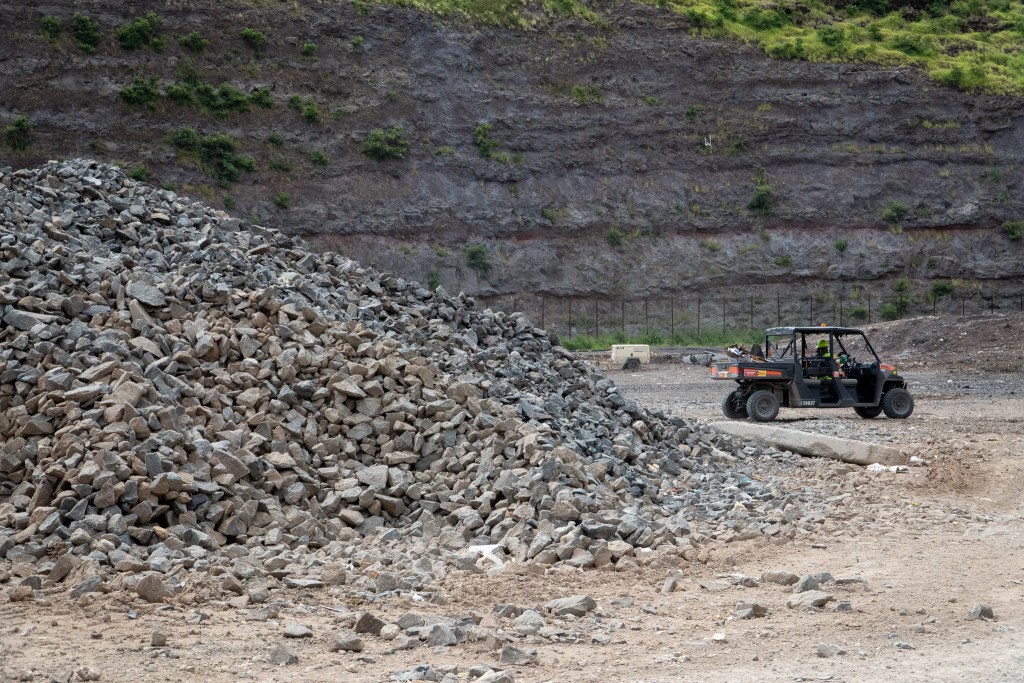
The start-over has to be explicit – the rest of us need to pay for the burden the landfill places on whatever community gets it. Give them some special benefits. Pay that community off.
That alone doesn’t deal with health and safety or other concerns that could develop.
Give people living around the landfill site area serious, continuous power. They should have a role in monitoring. There should be guarantees that data about the landfill operations will be publicly reported.
Lots of doubts about this succeeding, right? Understood. But nothing else has succeeded, and before your kid who just started high school even graduates, there will be no place to safely dispose of trash.
Honolulu is worse off than most places. Cities no longer locate new landfills within their city limits. They don’t have to. They can buy or otherwise get a piece of land a drivable distance away. Not possible on Oʻahu.
Cities ship the garbage elsewhere by boat. That would be extraordinarily expensive here, with huge logistical problems.
Burning waste for energy – as Oʻahu does now with H-POWER – creates ash that must be buried somewhere.
Aggressive waste reduction can help, as it has in San Francisco, that doesn’t come close to solving the problem.
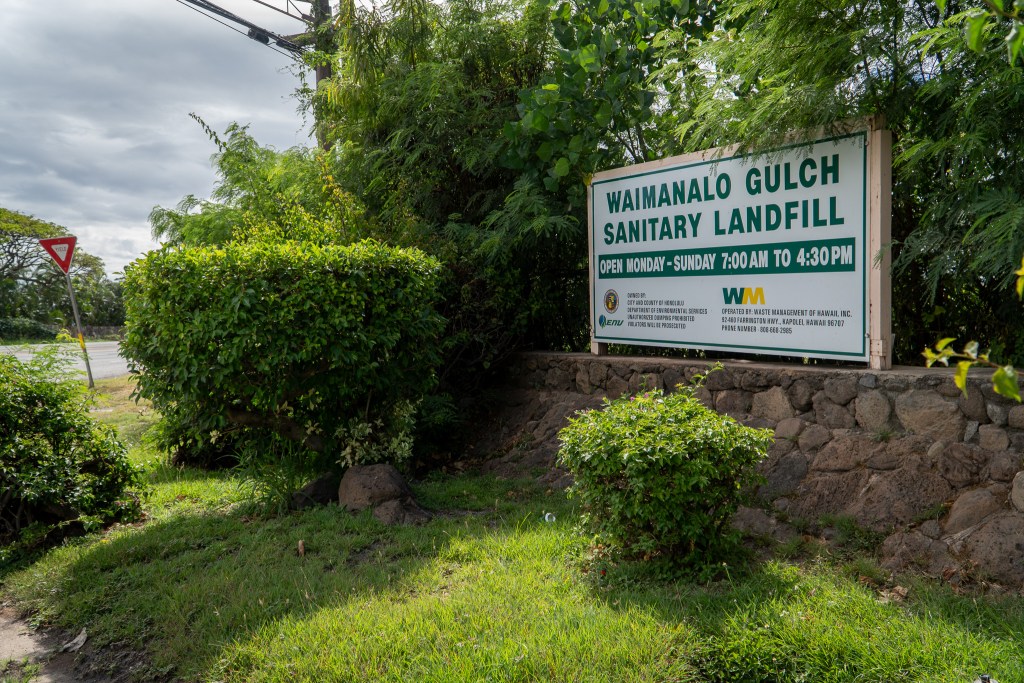
Even if we keep the Waimānalo Gulch dump open and break the promise to close it once and for all, that site only has a few more years left before it’s filled up for good.
So, in truth the distributive issue won’t go away at all.
Reduce Waste, Offer Benefits
This all sounds like a plot for a dystopian sci-fi movie.
Instead of fighting aliens from outer space, we have to go up against never ending, never removed piles of garbage and never-ending speechifying and justifying about why a landfill belongs “somewhere else.”
I’d rather take my chances with the aliens.
Here’s the most realistic outcome for now:
Given the short time frame, nothing but Waimānalo Gulch is available. That becomes the choice, and the city offers people living out there the benefits consistent with distributive justice. And we adopt more stringent policies that reduce waste.
This is not even close to a victory. Maybe it produces a sigh of relief, but it should also produce a bad taste in our mouths with its combination of unjust and inefficient government.
At the very least, reward the people around Waimānalo Gulch with the money and power consistent with being victims once again.
A last gasp: Time to quit kicking the trash can down the road and realize that the process so far has been garbage in, garbage nowhere.
 Sign up for our FREE morning newsletter and face each day more informed.
Local reporting when you need it most
Support timely, accurate, independent journalism.
Honolulu Civil Beat is a nonprofit organization, and your donation helps us produce local reporting that serves all of Hawaii.
ContributeAbout the Author