Decade Of Big Island’s ‘Try Wait’ Moratorium Spurs Plenty Fish — And Poaching
Ten years of no fishing has led to a huge recovery on a stretch of the Kona Coast. Now comes the hard part: Protecting those gains.
Last week, state land board members struggled with what to do about three Hawaiʻi island men who poached more than 4,000 ʻopihi snails off the rocks at Kaʻūpūlehu, a shoreline that’s recently transformed into one of the healthiest and plentiful stretches of the Kona Coast.
It wasn’t always this way. Decades of development and increased public access had depleted the once thriving waters that elders remember teeming with marine life — surgeonfish, crabs, lobsters, squid and ʻopihi.
Then, a decade ago, a 3.6-mile stretch of Kaʻūpūlehu and the neighboring region of Kūkiʻo were placed entirely off-limits to fishing under a novel, community-led moratorium called “Try Wait.” That project, enforced by the state and the only one of its kind in Hawaiʻi, was set to expire this month.
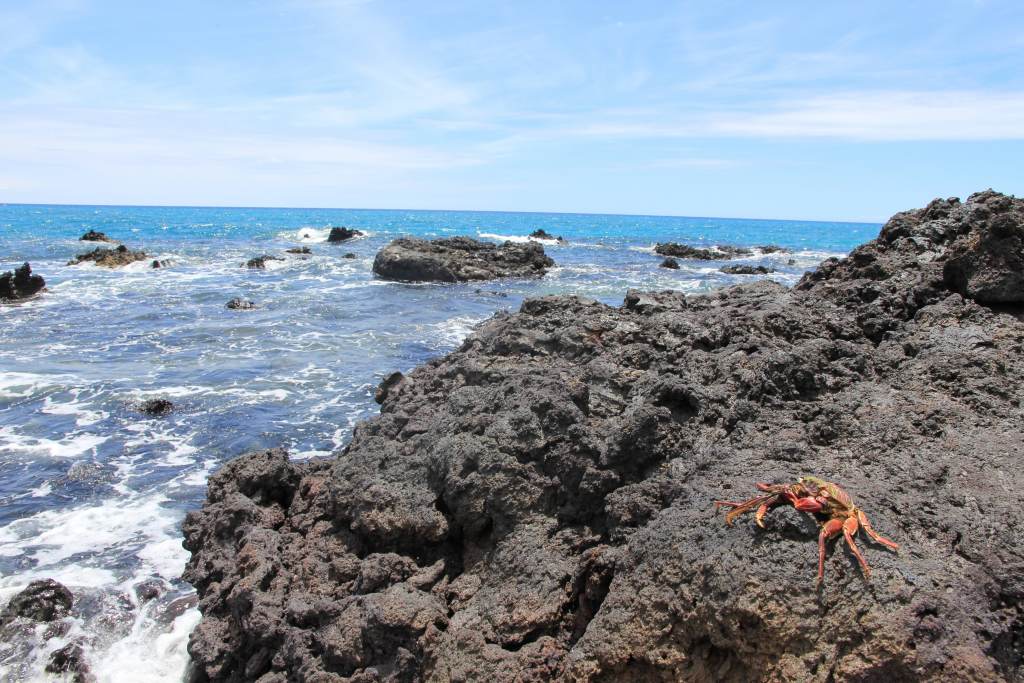
Now, the shoreline probably won’t reopen until later this year because community groups, cultural practitioners and longtime local families are still trying to hash out the proper fishing limits with state aquatic officials. They don’t want to move too fast and squander the decade-long sacrifice the community made by staying out of those waters.
As proof of its allure, Kaʻūpūlehu’s successful rebound has drawn at least two major poaching events in the past year there, including the ʻopihi harvest, which occurred in September. Advocates say those incidents heighten the need to get the rules and enforcement right.
“This place has been closed for 10 years and we want to make sure that the reopening is done very carefully,” said Rebecca Most, executive director of Hui Kahuwai, a nonprofit that plans to manage those fishing grounds with the state’s Division of Aquatic Resources.
“One of our biggest fears,” Most said, “is that the depletion happens rapidly and we lose the gains of Try Wait.”
The goal, she added, is to sustain at least 75% of the fish biomass gained during the moratorium.
‘The Reefs Feel Alive Again’
Try Wait launched in June 2016, following several decades of activism by local families to protect those nearshore resources as development brought more visitors to the area. The fishing grounds now rest in front of some of the most valuable and exclusive real estate on the Big Island, including the Four Seasons Resort Hualālai.
Many families and lineal descendants who grew up in the area, including Hui Kahuwai President Hannah Springer, witnessed a sharp decline in the marine life there during their lifetimes. They remember a far more abundant era – one they long hoped to bring back or at least get close to it.
“The big, the shiny, the rare and charismatic shell life clinging to the rocks (and) burying in the sand was remarkable,” Springer recalled, “and astounding for a child.”
Aquarium fishing — a controversial practice in West Hawaiʻi — was already off-limits there under a state law enacted prior to the Try Wait, Springer said, and will remain so after the moratorium’s lifted.
During Try Wait, the fish biomass at the Kaʻūpūlehu Marine Reserve grew to more than double the levels found in similar areas in North Kona, according to Mary Donovan, a researcher at the Hawaiʻi Institute of Marine Biology. That’s based on nearly 1,500 dive surveys done at Kaʻūpūlehu and Kūkiʻo in the past 17 years, advocates said.
The moratorium, Donovan and others said, also had a spillover effect, where fish increased in areas next door.
“The fish have come back. The reefs feel alive again. And for those of us who grew up in these waters, that means everything,” Big Island resident Kawika Ruddle said during a hearing in April on Kaʻūpūlehu’s future.
“It’s not just about numbers. It’s about connection,” Ruddle added. “It’s about being able to pass something healthy and abundant on to the next generation.”
‘A Fragile Recovery’
On Sept. 18, a volunteer with Makai Watch, a program that helps state authorities keep an eye on the coast for unlawful fishing, spotted three men picking ʻopihi at Kalaemano, an important cultural site in Kaʻūpūlehu, as a yellow-hulled boat waited just offshore.
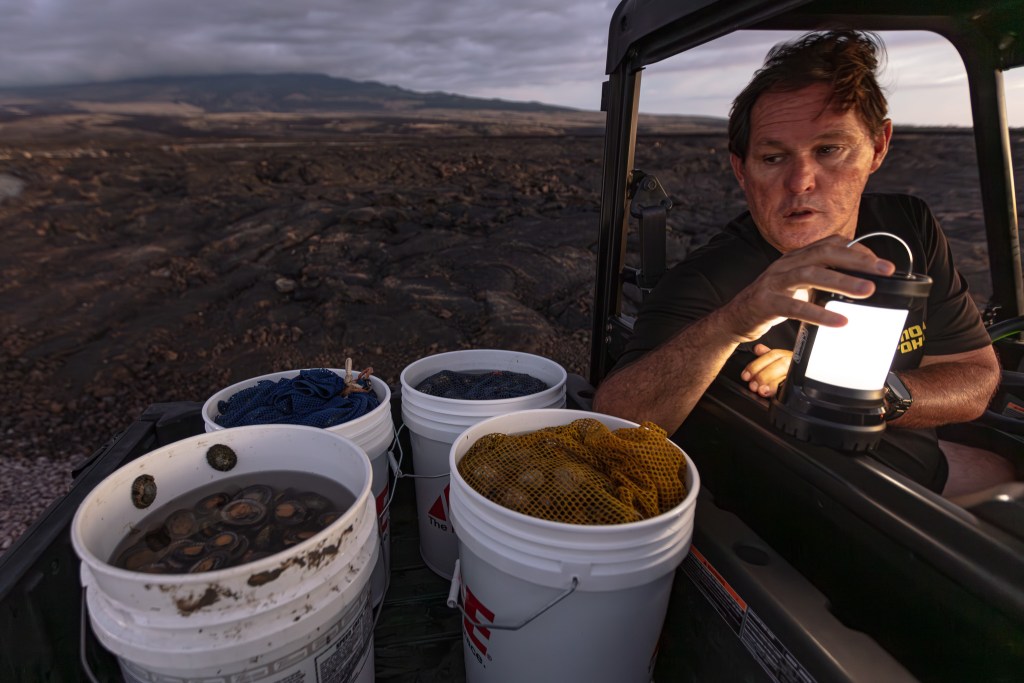
Division of Conservation and Resource Enforcement officers then tracked the boat along the coast from the shore for several hours until it arrived at Kawaihae Small Boat Harbor, according to state filings. The officers found 4,068 ʻopihi on board. The snails had been on a boat deck for hours, but were still alive.
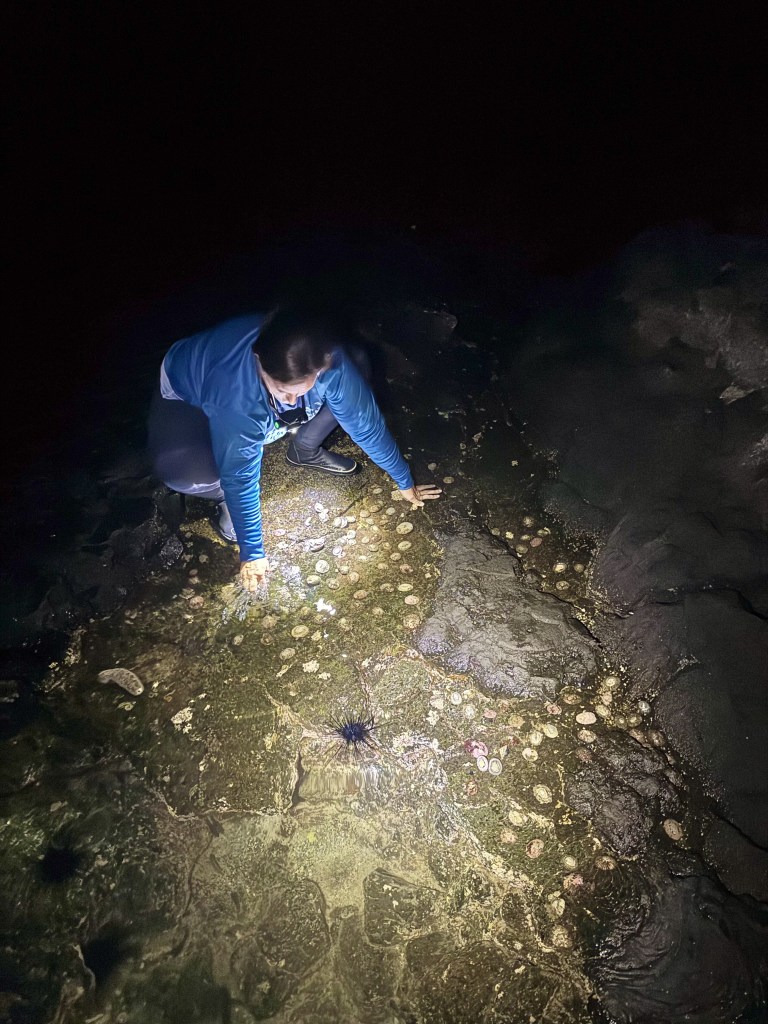
The officers handed the ʻopihi over to Hui Kahuwai and the group’s volunteers, who worked into the night trying to reattach them to the rocks in the marine reserve.
A majority of them, however, did not survive but Most said at least the nutrients they left behind benefited the shoreline ecosystem.
“It’s precisely the kind of event that shows us how fragile the recovery is that we’ve been working on this past decade,” Most told the Board of Land and Natural Resources on Friday. “The gains … can be wiped out when people who don’t know or respect this place treat the resource like an ATM instead of the icebox that it is.”
The board considered whether to levy more than $46,000 in fines divided evenly among the three men: Brandon Carvalho, Kaipo Botehlo-Matthey and Keaupililani Solomon-Lewis
Ashley Davis, a friend of Botehlo-Matthey, called in to the meeting to read a statement on the three men’s behalf. They didn’t realize they were in a marine reserve, Davis said, because no signs were visible from the water.
They were gathering food for their families, Davis added, calling it an “honest mistake.” She asked the board to substantially reduce the fines or consider community service instead.
Other testifiers and at least one board member expressed disbelief that the men intended to use such a large quantity of ʻopihi for family consumption.
“Four thousand, boys. That’s a lot. And we should be better than that,” board member Kaiwi Yoon said. Yoon, who’s Native Hawaiian, grew emotional after confirming the three men who took the ʻopihi were Hawaiian, too.
“These types of actions, boys, demonstrate our inability as a lāhui (nation) to love and preserve and protect our fragile cultural resources,” he added. “I’m hurt because we fought all these years for you guys, this next generation, and to claim ignorance is not acceptable.”
“The gains … can be wiped out when people who don’t know or respect this place treat the resource like an ATM instead of the icebox that it is.”
Rebecca Most, executive director of the nonprofit Hui Kahuwai
Most and others supported the fines, but the board unanimously voted to negotiate another type of settlement with the men after discussing the matter in private for about 30 minutes with the board’s legal counsel.
It was not the first poaching incident at Kaʻūpūlehu either. A separate fish taking at the reserve had happened several months before, Most and Springer said. They expect the board to review that incident at an upcoming meeting.
Taking It Slow
Hui Kahuwai, along with longtime families in the area, has already spent several years working on appropriate catch limits and other rules with the state to keep the progress made at Kaʻūpūlehu from swiftly disappearing. Fishing in that area will require a free permit once the moratorium lifts.
Some proponents, including the nonprofit group’s vice president, Kaikea Nakachi, are urging the division to proceed more cautiously and enact stricter limits.
A plan for the Kaʻūpūlehu Marine Reserve has already been revised three times since the first draft came out in 2023, according to Nakachi. Unfortunately, he added, each revision has rolled back restrictions that were proposed based on ancestral knowledge of how to best manage the marine resources there.
“Every revision,” Nakachi said during an April hearing, “represents the people of place giving up a protection.” He specifically called on the division to keep size limits and seasonal closures on the fishing of ʻulua in those waters so that they might reproduce more. He also called for additional fishing gear restrictions, such as prohibiting barbed hooks.
The Aquatic Resources Division, in a statement earlier this month, said it is reviewing the feedback it received in April and “making some decisions on next steps” before taking the proposal back to the land board for a final decision on the Kaʻūpūlehu rules.
Springer expressed hope that Kaʻūpūlehu could serve as a model for how state agencies coping with limited resources partner with community groups to better manage Hawaiʻi’s lands and waters in the future. Hui Kahuwai aims to take advantage of steps passed by the Legislature this year to make those partnerships stronger and easier to form.
Uilani Naipo, a cultural and natural resource advocate from Miloliʻi on the Big Island, called Kaʻūpūlehu at that April meeting the “best-case scenario we’ve ever had where Western science is put right alongside with traditional and cultural practices related to fisheries management.”
“I’m really surprised that a lot more rules didn’t come forth that are really cultural-based,” Naipo said. Still, she added, she’s going to trust that the co-management between Hui Kahuwai and the state division “will bring the best that we can have.”
Civil Beat’s coverage of climate change and the environment is supported by The Healy Foundation, the Marisla Fund of the Hawai‘i Community Foundation and the Frost Family Foundation and its coverage of environmental issues on Hawaiʻi island is supported in part by a grant from the Dorrance Family Foundation.