Political Newcomers Are Trying To Unseat West Kauaʻi House Rep
Rep. Dee Morikawa, who has held the District 17 seat since 2010, will face Chad Schimmelfennig in the Democratic primary.
A 16-year incumbent, an educator and a small business owner are vying to represent West and South Kaua‘i and Ni‘ihau in the state House this election.
The broad district ranges from the resort area of Po‘ipū, where hotels, timeshares and vacation rentals dominate the landscape, to the close-knit, rural residential communities of Waimea and Kekaha.
The Democratic candidates in the Aug. 8 primary — Daynette “Dee” Morikawa, who currently holds the seat, and Chad Schimmelfennig — have deep roots in Hawai‘i. Morikawa, who was born on Hawai‘i island and grew up on O‘ahu and Kaua‘i, has lived in Waimea since 1983. Schimmelfennig of Hanapēpē can trace his family’s history in Kōloa back six generations.
Morikawa has only faced a primary challenger twice since first winning the seat in 2010 by ousting then-Rep. Roland Sagum. The last time she had Democratic opposition was 2018 when she beat Stephanie Iona by 20 percentage points.
This year is one of the rare times Morikawa will face a Democratic challenger. In prior elections, she has easily defeated her Republican opponents. She said her career has been dedicated to public service and sees each election as a job evaluation.

“When people talk about term limits, I have to run for this office every other year,” Morikawa said. “To me, that is my job evaluation, and if you still want me there, then great.”
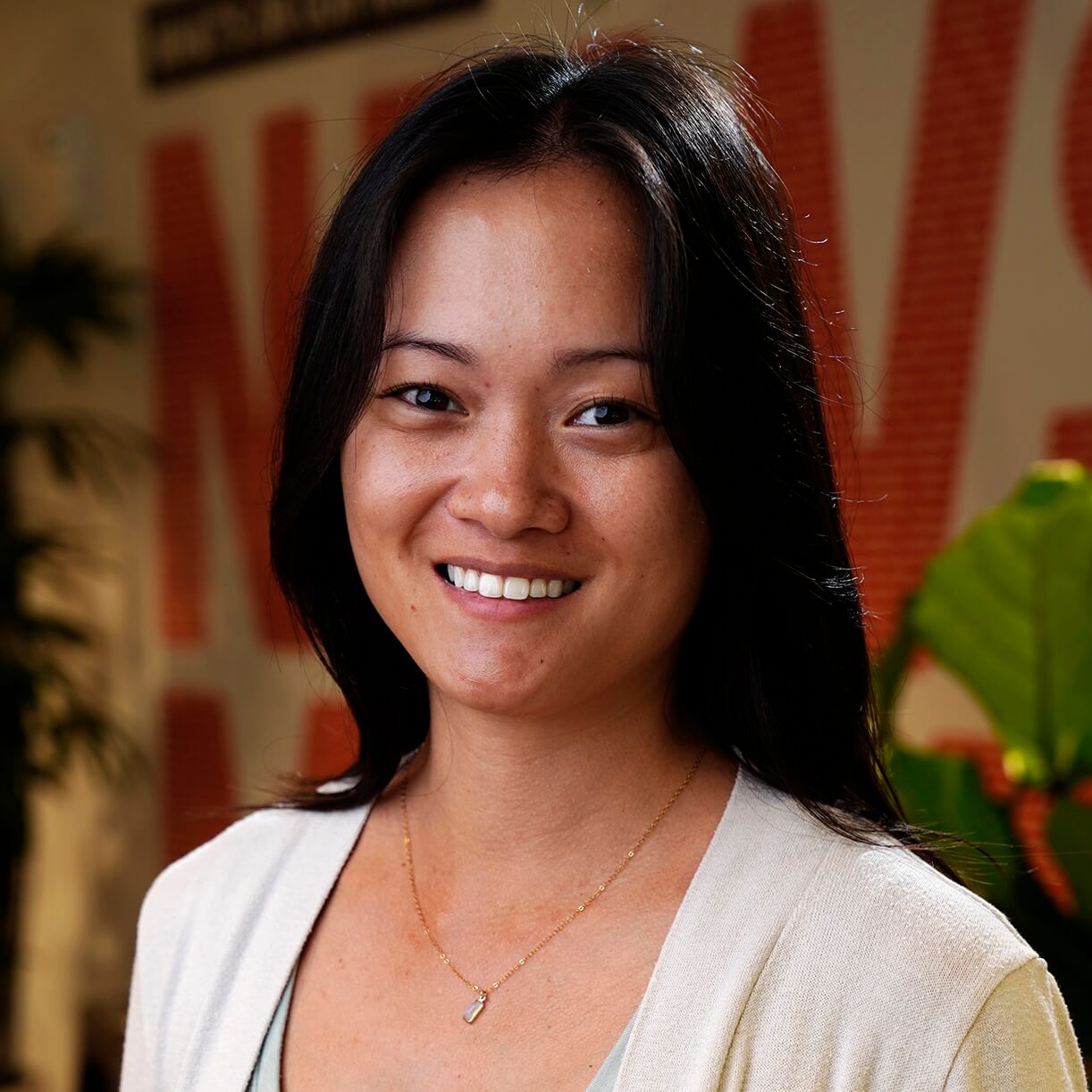
The winner of the Democratic primary will face Republican Misty Cluett, a small business owner who lives in Kalāheo, in the Nov. 3 general election. She partially grew up on Kaua‘i and returned full-time in 2018 to care for her aging father, whose roots on the island span generations.
Funding Kaua‘i’s Parks And Infrastructure
Much of Morikawa’s focus in the Legislature has been to bring in state funding for Kaua‘i projects. Parks are near and dear to her due to a 36-year career with Kaua‘i County — mostly in the Department of Parks and Recreation — before running for office.
She’s helped secure funding for various play courts in her district, Hanapēpē Stadium, Port Allen, Polihale State Park and Kōke‘e State Park.
“To me, that’s where we were lacking when I was in the county is getting the state’s cooperation to help fund the county’s needs,” Morikawa said. “But it’s exciting now that Kaua‘i has a speaker of the House and the Senate president. Now is the time for Kaua‘i to just do as much as they can to get projects funded.”
House Speaker Nadine Nakamura, who represents East Kaua‘i and the North Shore, and Senate President Ron Kouchi, the island’s sole state senator, are running unopposed. The island’s only other state lawmaker, Rep. Luke Evslin, whose district spans from ‘Ōma‘o to Wailua, will face Republican David Hazlebeck in the general.

One of the larger projects Morikawa championed was the $40 million, three-year Hanapēpē River bridge replacement project, which was completed in 2021. Another project currently underway is the construction of a new gym at Waimea High School. In 2022, the Legislature allocated $27 million to finance its design and construction.
The new Waimea gym will serve as an emergency shelter for area residents and its basketball and volleyball courts will be made to align with collegiate sports regulations, Morikawa said.
When it comes to lawmaking, Morikawa tends to introduce far fewer bills and resolutions than her Kaua‘i counterparts. This past session, she introduced seven compared with Evslin’s 95. Nakamura and Kouchi introduced closer to 400, though that stems from leading their respective chambers.
Morikawa said the Kaua‘i delegation has collaboratively taken care of the island, so she doesn’t always feel like she has to introduce her own bills. She also tends to sign on to bills proposed by the kūpuna, women’s and Hawaiian caucuses.
One of her own bills she’s especially proud of was a 2025 law to require the state Department of Land and Natural Resources to hold a lottery for Kōke‘e cabin leases, rather than an auction. In 2024, winning bids ranged from $15,500 to $41,000 for the rustic structures.
“That auction was just outrageously high, so that was a big accomplishment,” she said.
Looking ahead, Morikawa said she’s concerned about how existing infrastructure can be better maintained and improved to benefit residents before new developments are constructed. Many of her constituents would like to see county sewer expanded to serve their homes instead of converting to septic tanks.
“Take care of what you have first before you think about expanding out,” she said.
Representing The Community
Like Morikawa, Schimmelfennig’s adult life has been dedicated to service. After growing up in Hanamā‘ulu, he served with the Air Force for four years and then returned home to spend most of his career in education. He’s taught at Kaua‘i Community College and in the state Department of Education and served as an administrator at Kawaikini New Century Public Charter School.
He’s spent the last two years creating and running Nā Wai Hānai O Kahili, a nonprofit that is restoring part of an ancient above-ground irrigation system on the Kauanoe O Kōloa property being developed by Meridian Pacific, which declared bankruptcy over the luxury condo project last month.
Schimmelfennig said he doesn’t support the project but believes it’s important that the developer wanted to work with him and his nonprofit to protect cultural resources, including the ‘auwai site that was originally going to be a maintenance area. He’s also served as a cultural monitor in collaboration with the nonprofit.

Spurred by his friends, colleagues and community members over the last five years, he’s running for House because he believes the West Side should have a representative who understands the district through his lived experience there. He said he brings a multi-generational outlook to his work.
“We don’t just affect today and the future; we also are affecting our kūpuna that are in the ground,” he said.
Much of his time in recent months has been spent talking to and listening to community members and getting more informed about their priority issues. On the South Shore, residents have told him they fear the region is losing its sense of community and neighborliness as the area adds more hotels and luxury projects that don’t help working-class families.
The West Side has grappled with its projects. Last year, Dubai-based developers proposed revitalizing a plan to build a 250-room plantation-style inn in Kalapawai. That project was originally envisioned by the Robinson family, which owns tens of thousands of acres in the region and the entire island of Ni‘ihau, and received county approvals 20 years ago.
Read More: Use It Or Lose It? Kauaʻi Wants Robinson Resort Land Back To Agriculture
Schimmelfennig said that while some may see those projects as opportunities to stimulate the area’s economy, others worry they’ll minimize the community’s local feel.
“It’s not a bad thing, and again, I can’t stop development, but I do feel we need to keep our hands on a pulse to where it’s how are we benefiting the community, the people that live in the community, because once these things are gone, it’s the people who have to live with this,” he said.
Schimmelfennig supports the Kaua‘i County Council’s various efforts over the last several years to make it easier for families to build accessory dwelling units and Evslin’s legislative work to remove red tape from home construction.
“We can look at laws the county has passed and elaborate on them for the state level,” Schimmelfennig said.
Education is another priority for him given his background. He said measures proposed in the Legislature don’t always consider the full impacts they’ll have on charter schools and instead often focus on public schools, which may receive more funding.
A Focus On Small Business
No Republican has represented the West and South Kaua‘i in the state House for 60 years, but it’s not for lack of trying.
Cluett is the latest Republican to try. She and her husband have run a home remodeling business in Texas and on Kaua‘i and now own Kahale Cabinets and Design in Līhu‘e. She previously worked in engineering and program management roles at a Fortune 500 company.
She said her Christian faith guides her commitment to serving others. Like Schimmelfennig, she’s spent much of her time listening to community members’ concerns and ideas. Government accountability, small business, infrastructure, medical freedom and parental rights are some of the main focuses of her campaign.

She said more government accountability is needed considering former state legislators Ty Cullen and Kalani English were convicted of accepting bribes and the state Attorney General’s office is continuing its investigation into further bribery and campaign finance violations. Earlier this year, over 900 residents demanded that the Legislature investigate bribery allegations. Nakamura ordered the petition filed with no further action.
“You have a petition with 1,000 signatures on it that people are asking for some accountability, and it’s just shuffled away,” she said. “So, there’s that dynamic too. There’s a whole lot of things that I think need to be addressed, and that’s why I’m stepping in.”
When it comes to government spending, she said she wants to see more proactive and frequent evaluations and audits so that issues can be caught and prevented earlier.
“In a world where we are very careful with our spending, we know where every penny goes,” she said. “In the government, we don’t and that’s what I want to look at and find ways to improve.”
Like Morikawa, she’s concerned about infrastructure, saying that government should be expanding sewer systems, even if that means spending more money. The burden of converting cesspools shouldn’t fall on homeowners, she said.
During the Covid-19 pandemic, Cluett joined a Kaua‘i protest against stay-at-home measures. She said her opposition was regarding the mandated temporary closure of non-essential businesses, not the social distancing requirements. The government overstepped when it affected peoples’ livelihoods, she said.
She would have preferred that the government work with businesses to help them figure out how they could stay open and follow social distancing rules.
“It was very authoritarian,” she said. “A lot of families suffered financially.”
She’s also taken issue with attempts to remove religious exemptions for school vaccinations. The number of Kaua‘i students with a religious waiver increased to 9.5% in the 2024-2025 school year from 5.7% during the 2018-2019 school year. She said every vaccine carries a risk, and everyone should be able to choose whether that risk is appropriate for them.
“That’s just foundational for me, and so I have stood against those attempts to remove the religious exemptions, and I’ll continue to do that legislatively,” she said.
Cluett is running unopposed in the primary but will face the winner of Morikawa versus Schimmelfennig in the general election.
Civil Beat’s reporting on Kauaʻi is supported in part by a grant from the G. N. Wilcox Trust.