Public Corruption Directly Undermines Faith In Hawaii’s Government
Enforcement of civil and criminal laws is a necessary step to help cultivate democracy and restore public trust.
November 27, 2022 · 5 min read


About the Author

My father took me hiking up Mount Olomana at an early age. I suspect that’s where I fell in love with nature.

That memory stayed with me and eventually became a passion and interest in preserving Hawaii’s fragile environment.
That’s also why I care about ethics in government. Protecting our island ecosystem depends upon honest leaders, who can appropriately balance the needs of our economy and environment. Corrupt leaders no longer act in the best interest of the public.
Put simply, a healthy environment depends on a governmental system run with integrity.
For that matter, most public policy issues – such as health care, improving education, or strengthening the social safety net — depend on a fair governmental system. For a democratic system to truly work, it must serve in the public’s interest.
With the public corruption charges recently brought against two state legislators and several county employees, many have become disillusioned with government. Some have reasonably adopted a “vote the buggahs out” attitude or used this news as a reason to disengage from the democratic process (such as not voting in the most recent election).
This disillusionment, while disappointing, is not surprising. Elected officials and state employees are supposed to serve and act on behalf of the public-at-large. Public corruption directly undermines faith in our governmental system.
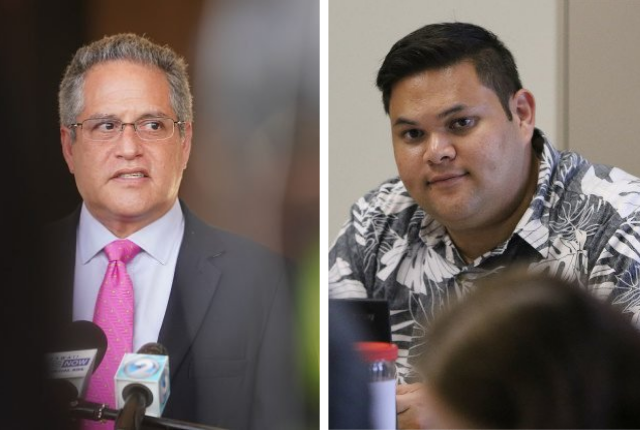
As the executive director and general counsel of the Hawaii State Ethics Commission, I was recently asked if my job was to help maintain public confidence in government. My knee-jerk response was to say, “no.” I said my job was to advise state employees about ethics and, when necessary, enforce the state Ethics Code and the state lobbyists law.
The Ethics Code includes laws relating to the acceptance and reporting of gifts, confidential information, fair treatment (the prohibited misuse of official position), conflicts of interests, state contracts, and post-employment restrictions, along with financial disclosure requirements.
Last year, the commission responded to 851 requests for advice from state legislators, employees, lobbyists, and members of the public. The hard-working commission members and staff additionally investigated 123 complaints and resolved 10 charges publicly.
And yet, my knee-jerk answer was wrong.
A core reason why Hawaii has an Ethics Commission is to maintain public confidence in our system of government. Ronald Reagan said that “democracy is not a fragile flower; still it needs cultivating.”
Enforcement of our civil and criminal laws is a necessary step to help “cultivate” democracy and help restore public trust in our government and its officials.
To some extent, the recent news of public corruption is an example of government working properly: truly corrupt and illegal activity is being caught and publicly called out. But the severity of recent public corruption charges demonstrates more work is needed.
The Ethics Commission is actively developing several specific legislative policy changes for consideration next year in the Hawaii Legislature. While none of these concepts will magically prevent all violations in the future, they cumulatively represent solid steps toward a more transparent system that reduces the potential for unethical conduct and helps restore public confidence in our democratic system.
For example, the Ethics Commission proposes to directly prohibit nepotism: expressly eliminating the ability for state employees to hire or supervise a spouse or family member. A bright-line approach to nepotism will help address a practice that, from a public perspective, reasonably appears unethical.
Another proposal is to increase transparency around legislators’ financial connections with lobbyists or businesses that hire lobbyists. Legislators are, by design, part-time employees.
Although the Ethics Code does not prohibit legislators from having outside employment, some legislators may work with, or be employed by, businesses that have a direct interest in legislation. The public has a right to know of these potential conflicts of interests, especially when a substantial amount of money is involved.
Like all of us, I care about the future of Hawaii.
Further, when conflicts of interests exist, legislators should recuse themselves from discussing, deliberating, or voting on that issue. Many may remember a John Oliver skit blasting Hawaii legislators for finding “no conflict” in a vote over 10-cent fees for plastic checkout bags, when a legislator was a paid consultant for a plastic bag manufacturing association.
Another Ethics Commission proposal would make recusal a requirement when a financial conflict exists, or where a reasonable person would perceive a conflict.
Like all of us, I care about the future of Hawaii. I want to see great decisions by leaders who genuinely care about the public’s interest first and foremost.
The Hawaii Constitution states that “public officers and employees must exhibit the highest standards of ethical conduct.”
I hope you will join the Ethics Commission and me in pushing for common-sense principles that will hold the nearly 60,000 state employees and elected officials to this standard and commitment. Let’s restore confidence in government together.
 Sign up for our FREE morning newsletter and face each day more informed.

Local reporting when you need it most
Support timely, accurate, independent journalism.
Honolulu Civil Beat is a nonprofit organization, and your donation helps us produce local reporting that serves all of Hawaii.
ContributeAbout the Author