Naka Nathaniel: The Military Wants New State Land Leases. What Should We Get In Return?
Native Hawaiian groups should step forward to challenge the state and the military.
September 23, 2024 · 6 min read


About the Author
A big question asked often at the Native Hawaiian Convention last week is what comes next for the leases for U.S. military wants to renew on state-owned land by 2029.

What is “the ask” of the military? Could the military be simply forced to give up the lands at the end of leases? Would it just seize the land? What lessons from the Mauna Kea protests could be applied?
And, perhaps the most poignant question of the convention: Which Native Hawaiian organization is leading the military lease negotiations?
The last question was asked by Mahina Paishon of Aina Aloha Economic Futures to a ballroom of Native Hawaiian leaders. Her question was met with silence. There was no answer.
“It’s definitely the only opportunity in our lifetime to have a say in what happens,” Camille Kalama of Koʻihonua, said during an earlier panel discussion, “ʻAina Back: Military Lease Expirations in Hawaii.”
The leases expire and that thereʻs no provision to automatically renew them.
Right now, the negotiations are between the Hawaii Board of Land And Natural Resources, led by Dawn Chang, and the Pentagon.
ʻTheyʻre Going To Bury Us In Paperʻ
The lengthy process involves environmental reviews and other assessments. Kalama, a former litigator for the Native Hawaiian Legal Corp., said “they’re going to bury us in paper.”
Hereʻs whatʻs at stake: The Pentagon leased 30,000 acres in multiple parcels of state land in 1964 for 65 years for a dollar. Often, itʻs mistakenly said that the 65-year lease is for a dollar a year. Nope, it was $1 for 65 years.
The lands include the Pohakuloa Training Ground not far from the site of the action on Mauna Kea that blocked the construction of the Thirty Meter Telescope more than five years ago.
Many of the leaders of the Kiaʻi Mauna movement were on hand to share their views.
“You have to remain visible,” said Pua Case, featured in “Standing Above the Clouds,” which will premiere at the Hawaii International Film Festival next month. Once you are not visible, she said, “they’re going to say, ‘Oh, they’re not standing anymore. Quick we go'” and start building.
Hence, the logical question: Could the successful activism from Mauna Kea be extended to the lease negotiations?
“It’s a different animal because it’s the military,” said Kyle Kajihiro, the board chair of Hawaii Peace and Justice. Kajihiro said the protests at Mauna Kea politicized a new generation of activists.
There was a single access road to the summit that passed through Hawaiian homelands and the construction route could be blocked. Kajihiro said that it is harder to employ grassroots efforts in these negotiations.
The talks “are happening in these administrative meetings,” said Kajihiro. “It is out of sight and out of our reach in many ways, and that’s by design.”
That conduct fits with the militaryʻs track record. No one in Hawaii can feel good about the militaryʻs stewardship of Hawaiian lands and waters. The list of sins are considerable. The contamination of the water supply from the Red Hill leaks, the wildfires caused by live fire exercises and a plane landing on a reef in Kaneohe Bay are just the most recent.
The military will spend any amount to hold on to the lands, but will selling out be politically and reputationally ruinous?
Right now, Hawaiiʻs political leadership doesnʻt seem ready to upset the status quo.
Could other asks be made? Hereʻs an idea:
The Department of Defense just announced that it would give the Hawaii Department of Education $3.5 million for Spanish and Japanese language classes in Oahu schools. What if the Pentagon doubled the budget of the state Department of Education and funded our stateʻs public school system for the duration of the lease? Our schools could also be reformed by implementing the successful programs and approaches that make Department of Defense schools the envy of the educational world.
But there are others who believe that even asking is just further submission, especially since thereʻs such a strong hand to be played. Instead of asking, the state could just tell the Pentagon what will happen next.
“If we look at our Hawaiian political history, we know that all of our big Hawaiian wins have always come through activism,” said Andre Perez, a military veteran and activist.
Perez cited Kahoolawe as one of those first wins. The military stopped bombing the island and started to clean up unexploded ordnance. Perez worked on Kahoolawe removing the UXO.
No Renewal Or Extension, Then What?
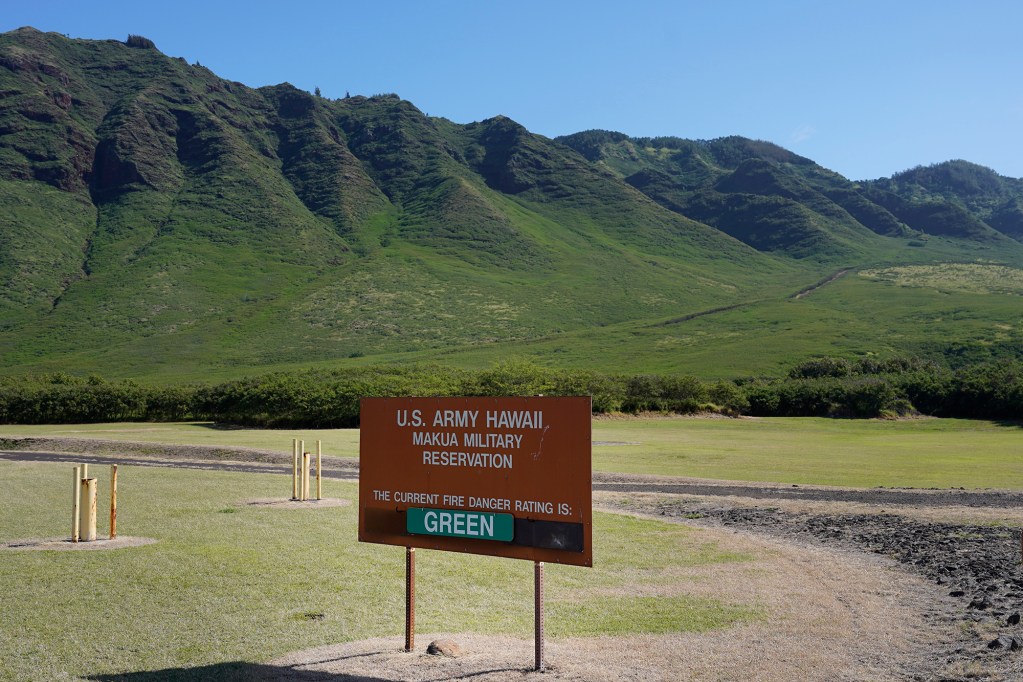
And finally, what would happen if the state just said, “No more, thatʻs it. Just like we took back Kahoolawe in 2003, we are taking back the Pohakuloa and Kahuku training areas and Makua Valley.”
Due to the militaryʻs activities on those sites, those once thriving lands, like Kahoolawe, wonʻt be inhabitable even if returned.
And, by the way, the lands the military controls arenʻt just state lands. They also have taken lands from the Native Hawaiian alii trusts.
Kehau Abad, vice president of strategy and experience at Kamehameha Schools, said the military seized close to 4,000 acres from the trust established by Princess Bernice Pauahi Bishop to educate children in Hawaii. The land includes more than 40 acres in Waikiki where Fort DeRussy is located.
Lastly, the question that breaks everyoneʻs spirits is: What if the military just seizes the land?
Thatʻs just a continuation of the hurtful way the United States and its citizens have treated a small group of islands in the middle of the Pacific whose Indigenous population is dedicated to the spirit of aloha.
Last weekend, I moderated a panel at the Hawaii Book and Music Festival with the young plaintiffs in the Navahine F. v. Hawaii Department of Transportation settlement. Speaking with them, I felt a sense of hopefulness. They, and their aloha-driven advisors, have found a less adversarial way of solving problems. The optimist in me wishes the Pentagon would see how we solved a problem in Hawaii with aloha and follow in those footsteps.
Iʻm an optimist and trying to stay that way.
While there were certainly more questions than answers, the convention itself was a rendezvous point for the groups that will likely end up pushing on the Board of Land and Natural Resources.
So while no one Native Hawaiian group has taken a lead in the negotiations, they are starting to coalesce. All the groups have a considerable stake in redefining the militaryʻs status in Hawaii for not only the next generation of Native Hawaiians, but all future residents of Hawaii.
 Sign up for our FREE morning newsletter and face each day more informed.
Read this next:

Local reporting when you need it most
Support timely, accurate, independent journalism.
Honolulu Civil Beat is a nonprofit organization, and your donation helps us produce local reporting that serves all of Hawaii.
ContributeAbout the Author