

Empty Shelves: Young Brothers Misses 3 Shipments To Molokaʻi In 21 Days
The shipping monopoly has missed its past two shipments to the Friendly Isle, plus another last month, leaving residents frustrated by empty store shelves and costly alternatives.
The ice cream parlor doesn’t have ice cream, the grocer is running dangerously low on fresh produce and Moloka‘i’s 7,000 residents are digging into their freezers after the barge didn’t come in for the third time in three weeks.
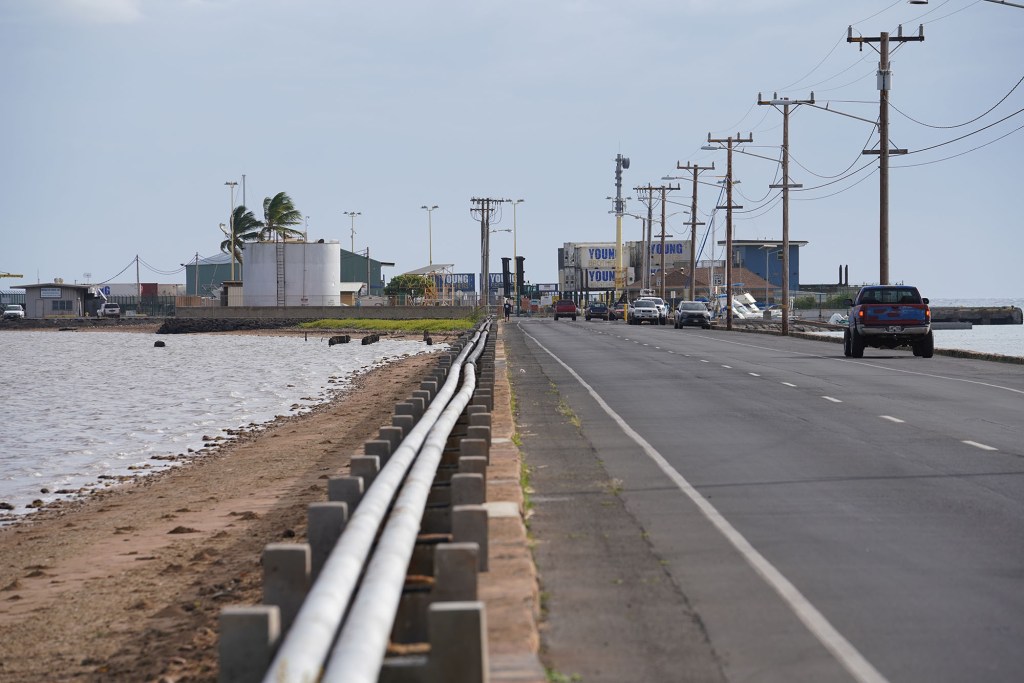
Young Brothers missed shipments on Monday and Thursday, two of the island’s crucial twice-weekly line of supplies from O‘ahu, along with another miss last month. The interisland shipping monopoly blamed weather and machinery for its absences, which also included missed shipments to Lānaʻi. Its barges carry everything from fresh produce and household goods to medical supplies and construction material to the island — and also then ship Molokaʻi’s goods to Honolulu.
Business owners, farmers and residents are becoming increasingly agitated by Young Brothers, especially in light of recent shipping cost increases and Gov. Josh Green’s signing of automatic annual price hikes. With the most recent cancellations, many are wondering what the shipping outfit is doing with all the extra money the state is allowing it to charge for its services.
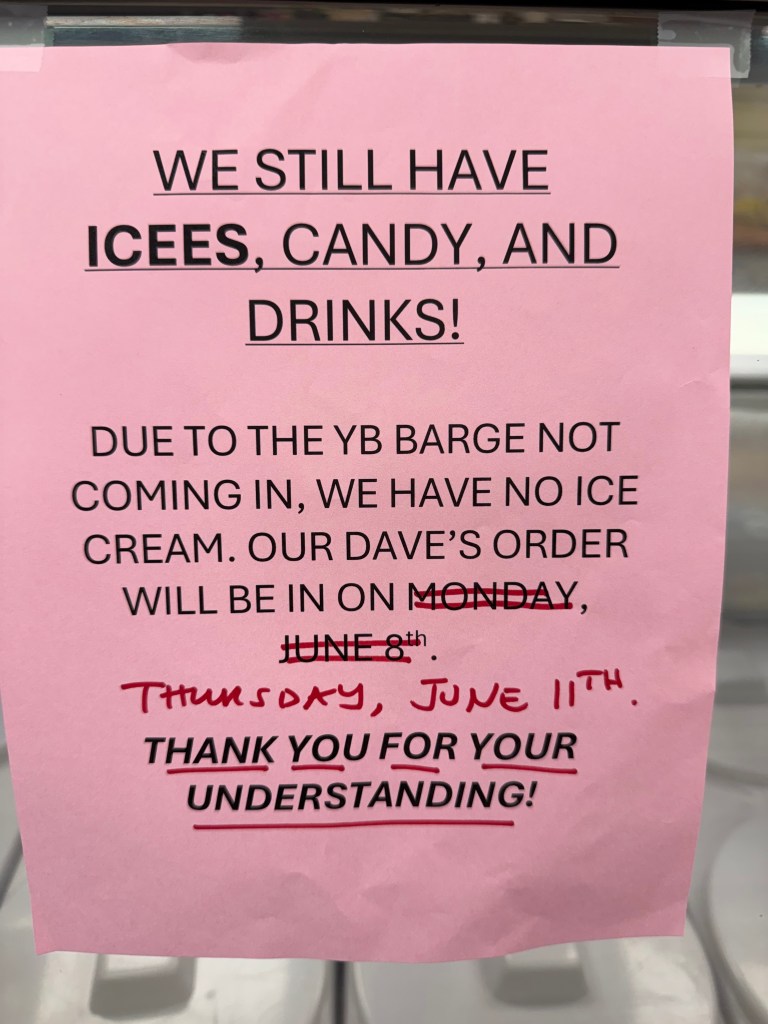
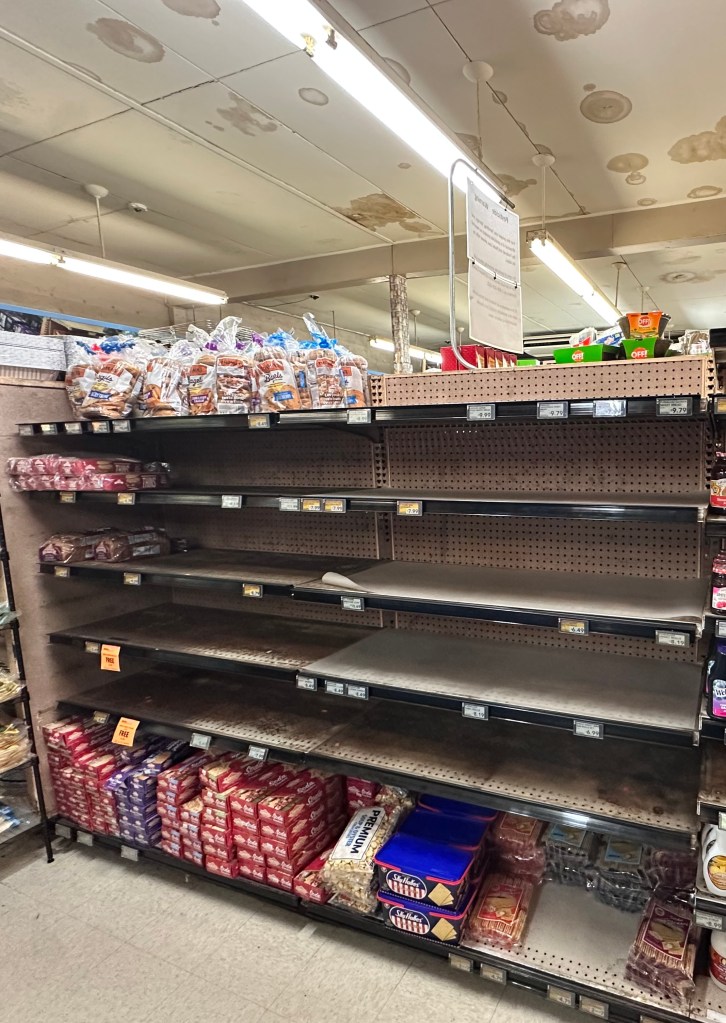
Some have been forced to pay more than twice as much to ship by air, while others are rushing to nab what’s left on the shelves.
Young Brothers would not make anyone available for an interview on Monday. But in an email, Marine Operations Director Megan Rycraft said the ocean carrier was “working to recover as quickly as possible… Young Brothers is the only ocean carrier to serve these islands, and that responsibility is something we take seriously with every sailing.”
On the island, the situation was a reminder of the Covid-19 pandemic, when bare shelves prompted questions about the reliability of the state’s import-dependent food supply. Imports comprise somewhere between 80% and 90% of Hawaiʻi’s food supply.
For Molokaʻi, right now, “this is actually worse,” said grocer Kit Okimoto, whose family owns Friendly Market Center in Kaunakakai.
Canceled barges are not unheard of but two in a row is, according to Glenn Teves, a retired University of Hawaiʻi agriculture college worker. Typically, in any given year, the shipping outfit cancels 11 barges. Teves said five interisland shipments have been cut this year.
“They need to be held accountable, with the amount of money they’re making, the price increase, sitting on the money from the state,” Teves said. “They need a fire set underneath their ʻōkoles.”
The company blamed the first cancelation on strong southern swells, making it too dangerous for crew, and the second on a broken tugboat.
Empty Now, Glut Later
Friendly Market’s now-empty produce shelves will be overstuffed when Young Brothers’ shipments arrive because they’ll be carrying three times as much as the grocery store generally orders.
One of three full-service grocers on Molokaʻi, the store orders produce frequently to ensure fresh product remains available.
The produce that arrives on Molokaʻi comes directly from the U.S. mainland via Honolulu, meaning it’s already nine to 10 days old by the time it hits shelves.
When shipments don’t come or are delayed, produce rots inside the shipping container. And when shipments finally arrive after a cancelation, the grocers will have to throw much of it away.
Friendly Market will end up eating the cost, Okimoto said.
It’s just another cost on top of years of increased shipping prices, which Okimoto said does not seem to correlate with any improved service from the shipping outfit.
It’s affecting the price of the store’s produce as well, trickling down to make the cost of living on the island even higher, he said, because there’s only so much efficiency and cost-cutting measures to be found.
“It’s really difficult to keep supplying while absorbing more and more and more,” Okimoto said. “That’s what frustrates us about Young Brothers, it doesn’t feel like they’ve addressed their inefficiencies.”
For now, as they await word from Young Brothers, Okimoto is actively monitoring what remains on his store’s shelves. But by Thursday, when the next shipment is scheduled to arrive, he said “it’ll be really bad.”
“It’s very established on Molokaʻi that the best shopping days are Mondays and Thursdays because that’s when the fresh produce comes in,” Okimoto said. “This Thursday morning, I’m not sure what will even be on the shelf.”
If Not By Sea, By Air
Jonathan Jefts of Molokaʻi’s Akea Farms has opted to fly his cucumbers out to Oʻahu after the cancelations, even with the comparatively hefty price tag.
A canceled barge adds two or three days to the shipments, because the harvests have to be picked up from port and transported to the airport. By sea, Jefts sends about 26 pallets at once but he can only send four due to capacity issues with Kamaka Air.
It also costs about twice as much, which the farmer feels he has to absorb because “when you don’t sail, the customer doesn’t care,” Jefts said.
Jefts has flown 92,000 pounds of produce so far this year because of Young Brothers, all in a bid to keep his customers happy. The sea freighters’ delays have contributed to him losing business on Oʻahu, he said, which required a lot of work to regain.
Young Brothers has meanwhile failed to keep the community informed, Jefts said, waiting until the last minute to let them know about broken down tugboats and bad weather. Kamaka Air, he said, has been a saving grace for businesses like his.
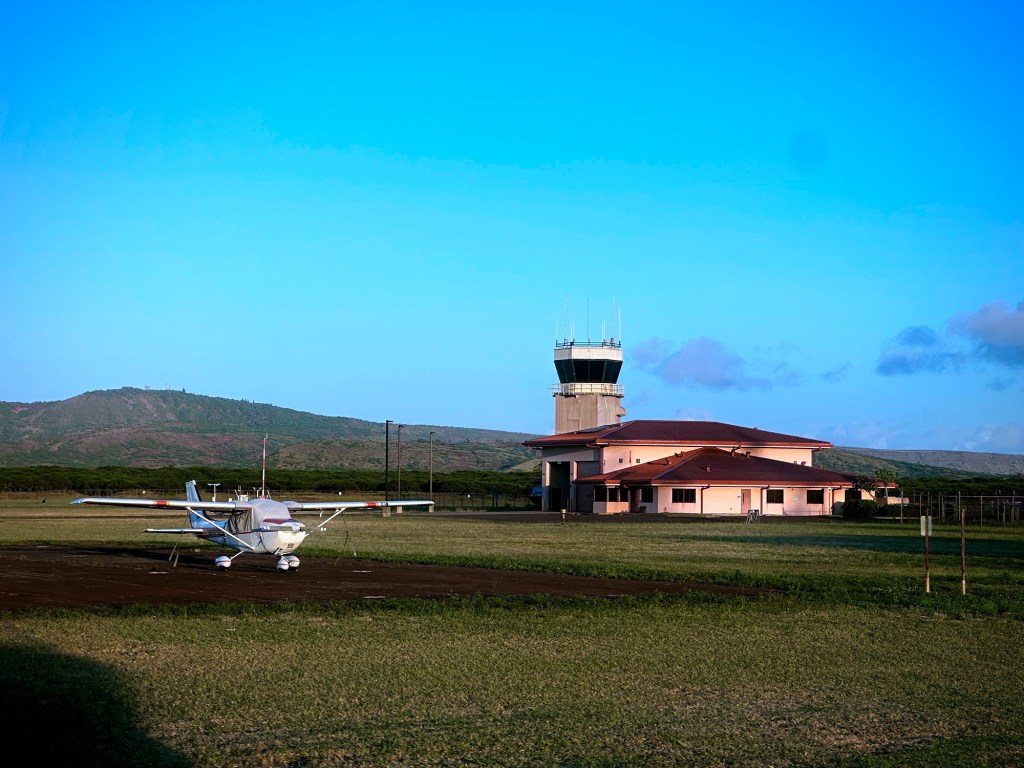
“Kamaka really is saving businesses,” he said. “It hurts like crazy to pay their rates but it’s better than just telling the customer ‘Sorry but we can’t meet your needs right now.’”
There has been a 20-30% increase in demand in the small air cargo business’s services in the past week, President and General Manager George Kaanana said. The uptick happens every time there’s a ship cancelation.
“We’d like them to stay with us,” Kaanana said. “I guess there’s that difference between air and ocean (costs). As a business person, I also understand where they are at right now.”
With livestock, air transportation is typically impossibly expensive. For Molokaʻi Livestock Cooperative, a slaughterhouse that processes other islands’ livestock, the lack of access to shipping has pushed operations back more than a week, according to general manager Randy Cabreros.
That means customers have also been waiting for almost a week, with shipments of meat from Molokaʻi still waiting to be taken to Oʻahu.
“I fully understand (Young Brothers has) no control over the weather,” he said. “I just hope it helps people understand the importance of food security. This whole system is volatile — not enough cushion.”
Molokaʻi is a fiercely independent community with a strong culture of self-sufficiency, though many must still rely heavily on grocery stores for their food. And the number of commercial farmers is on the decline, according to Teves, who has worked for the UH agriculture college for decades.
“Maybe this is just a little blip in the whole picture in the state of Hawaiʻi because we represent less than 1% of the state’s population,” Teves said. “But it could be a preview of what’s to come for the entire state.”
“Hawai‘i Grown” is funded in part by grants from the Stupski Foundation, Ulupono Fund at the Hawai‘i Community Foundation and the Frost Family Foundation.

